
 Wildlife
of Mongolia
Little Curlew
Scolopacidae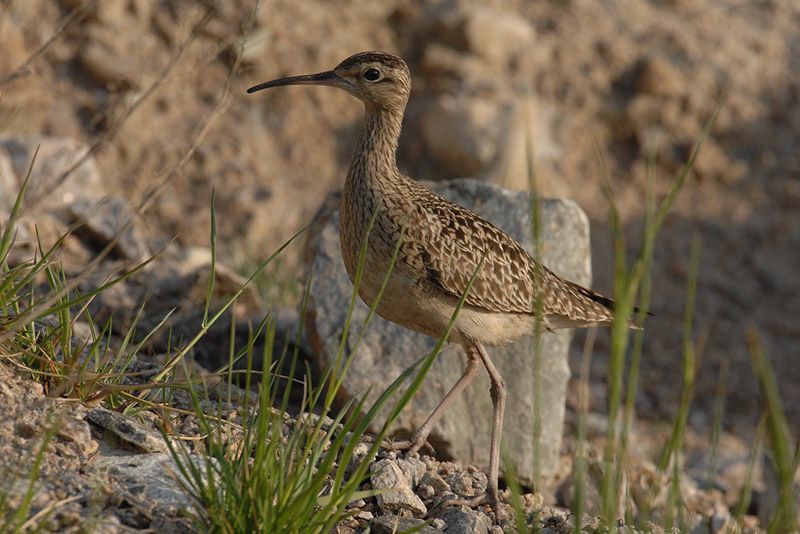
Photo: (c) Kim, Hyun-tae, some rights reserved (CC BY) · CC BY 4.0 (May be cropped or resized)
Numenius minutus
Basic stats
Diet
Small invertebrates, taken by probing soft mud
Habitat
Forest clearings in river valleys when breeding; inland grassland, cultivation or fresh water in winter
Range
Breeds in the far north of Siberia; winters mainly in northern Australia
Size
28–31cm
Wingspan
68–71cm
Weight
Average 175g
The little curlew is the smallest curlew, averaging 28–31 centimetres long with a wingspan of 68–71 centimetres and a weight of about 175 grams. It is mainly greyish-brown, including the underwings, with a white belly and a bill that is short for a curlew and curved. The head pattern, with crown and superciliary stripes, resembles a Eurasian whimbrel's. The call is a repetitive whistle. It is closely related to the North American Eskimo curlew. (Wikipedia, general species account)
A strongly migratory wader, it breeds in the far north of Siberia, in loose colonies in forest clearings in river valleys, with the nest a scrape on the ground. It winters in Australasia, mainly in northern Australia, inland on grassland, cultivation or near fresh water. It is gregarious, forming sizeable flocks, and feeds by probing soft mud for small invertebrates. It is a very rare vagrant to western Europe. (Wikipedia, general species account)
Quick answers
- What does the Little Curlew eat?
- Small invertebrates, taken by probing soft mud
- What habitat does the Little Curlew live in?
- Forest clearings in river valleys when breeding; inland grassland, cultivation or fresh water in winter
- Where is the Little Curlew found?
- Breeds in the far north of Siberia; winters mainly in northern Australia
- How big is the Little Curlew?
- 28–31cm
- What is the wingspan of the Little Curlew?
- 68–71cm
- How much does the Little Curlew weigh?
- Average 175g