 Wildlife
of Mongolia
House Sparrow
Passeridae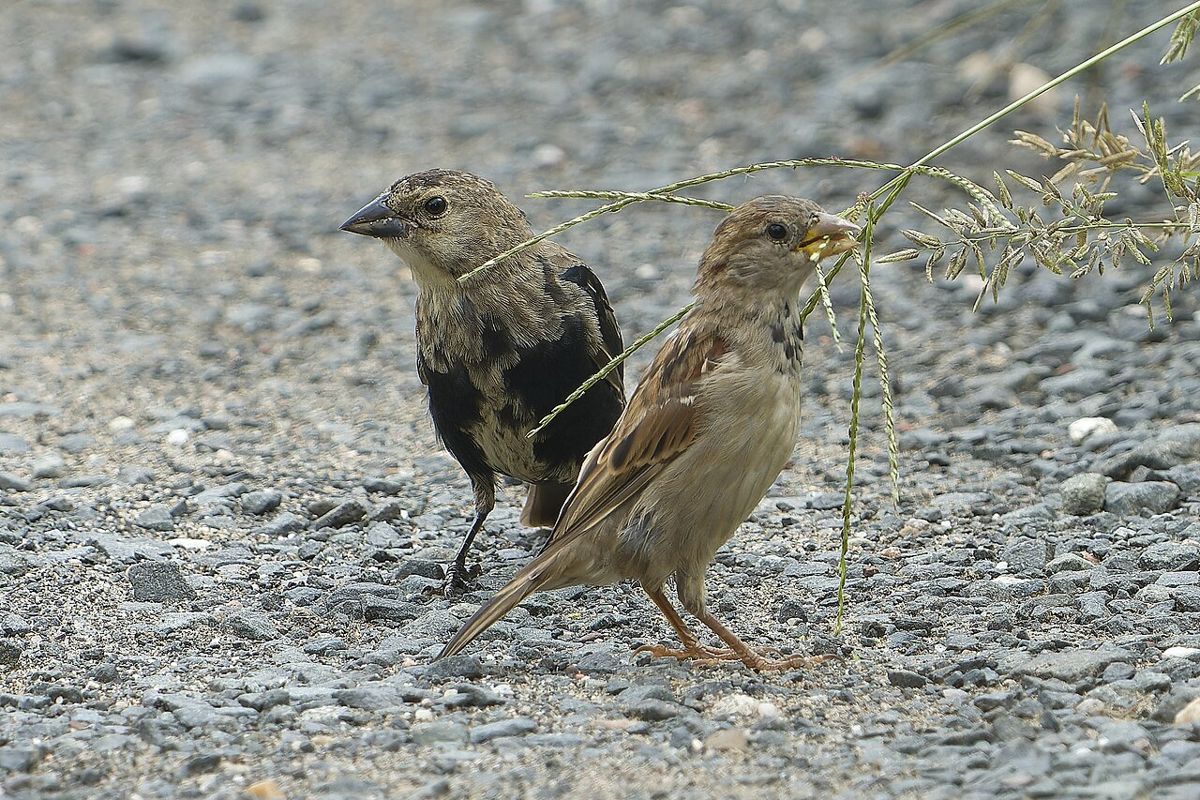
Photo: Paul Danese · CC BY-SA 4.0 (May be cropped or resized)
Passer domesticus
Basic stats
Diet
Seeds, grain, insects and food scraps
Habitat
Settlements, farms and other human-modified places
Clutch size
4–5 eggs
Size
14–18cm
Wingspan
19–25cm
Weight
24–39.5g
The house sparrow is a chunky, short-legged sparrow with a stout seed-eating bill. Males have a grey crown, chestnut nape, pale cheeks and a black throat bib, with a brown, black-streaked back. Females and juveniles are much plainer grey-brown, with a buff eyebrow and no black bib. It measures roughly 14–18cm. The male's grey crown and unspotted cheek separate it from the Eurasian tree sparrow's chestnut crown and black cheek spot. (Wikipedia, house sparrow account)
Closely associated with people, house sparrows use towns, villages, farms and transport buildings across much of their worldwide range. They feed mainly on seeds and grain but readily take insects, particularly for nestlings, as well as discarded human food. Birds forage and roost socially. Pairs nest in cavities in buildings, cliffs or trees and also occupy nest boxes, filling the space with dry grass and feathers. Several broods may be raised in a breeding season. (Wikipedia, house sparrow account)
Quick answers
- What does the House Sparrow eat?
- Seeds, grain, insects and food scraps
- What habitat does the House Sparrow live in?
- Settlements, farms and other human-modified places
- How many eggs does the House Sparrow lay?
- 4–5 eggs
- How big is the House Sparrow?
- 14–18cm
- What is the wingspan of the House Sparrow?
- 19–25cm
- How much does the House Sparrow weigh?
- 24–39.5g