 Wildlife
of Mongolia
Grey Plover
Charadriidae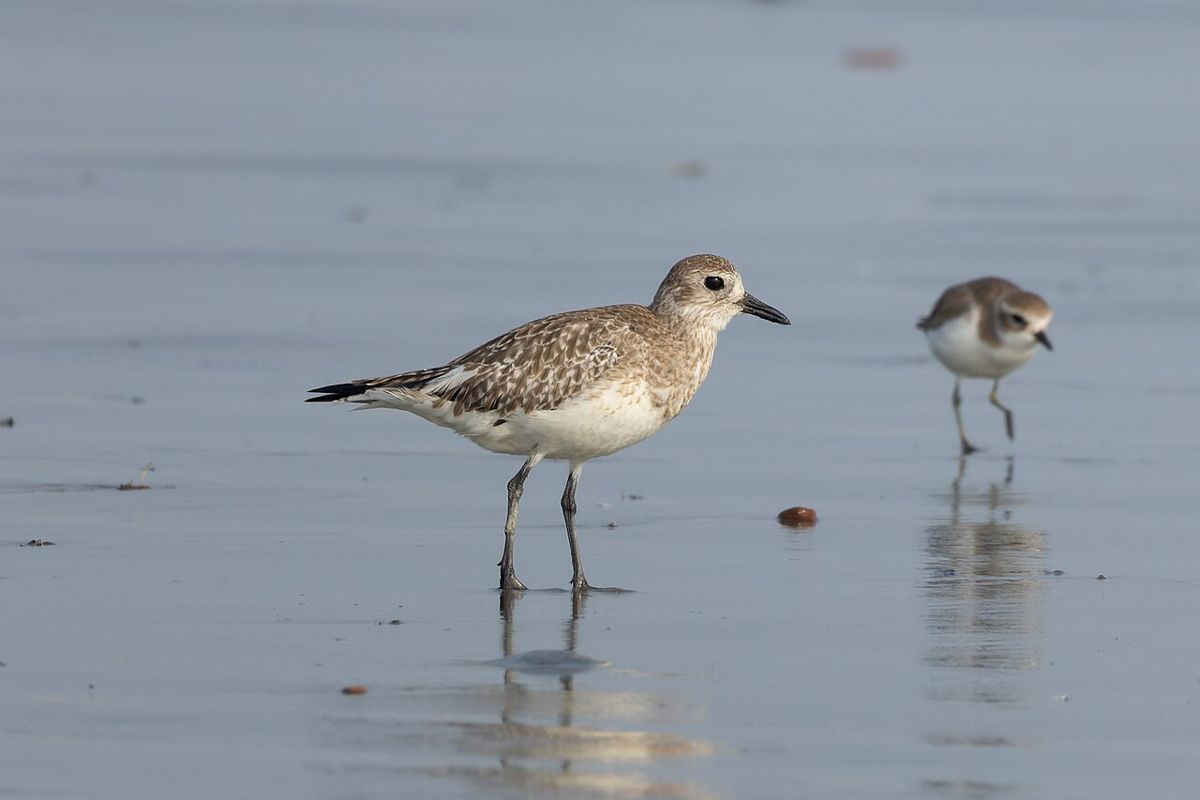
Photo: Tisha Mukherjee · CC BY-SA 4.0 (May be cropped or resized)
Pluvialis squatarola
Basic stats
Diet
Small molluscs, polychaete worms, crustaceans, and insects
Habitat
Arctic breeding grounds; beaches and tidal flats outside the breeding season
Range
Breeds in Arctic Eurasia and North America; non-breeding distribution is nearly worldwide along coasts
Size
27–30cm
Wingspan
71–83cm
Weight
190–280g, reaching 345g before migration
The Grey Plover, called Black-bellied Plover in the Americas, is a large plover measuring 27–30 centimetres with a 71–83-centimetre wingspan. Breeding adults have spotted black-and-white upperparts, a black face, neck, breast, and belly, and a white border along the dark face. The rump is white and the white tail is barred black. Winter birds are much plainer grey above with a speckled breast and white belly, while juveniles show creamy-edged dark back feathers. (Wikipedia, Grey Plover account)
Grey Plovers breed in Arctic regions and migrate long distances to a nearly worldwide coastal non-breeding range. Away from the breeding grounds they forage mainly on beaches and tidal flats, locating prey by sight. Their food includes small molluscs, polychaete worms, crustaceans, and insects. Feeding birds are less tightly gregarious than other Pluvialis plovers and often spread widely across the shore, each separated from its neighbours. At high tide, however, they gather into dense communal roosting flocks when exposed feeding areas are covered. (Wikipedia, Grey Plover account)
Quick answers
- What does the Grey Plover eat?
- Small molluscs, polychaete worms, crustaceans, and insects
- What habitat does the Grey Plover live in?
- Arctic breeding grounds; beaches and tidal flats outside the breeding season
- Where is the Grey Plover found?
- Breeds in Arctic Eurasia and North America; non-breeding distribution is nearly worldwide along coasts
- How big is the Grey Plover?
- 27–30cm
- What is the wingspan of the Grey Plover?
- 71–83cm
- How much does the Grey Plover weigh?
- 190–280g, reaching 345g before migration