
 Wildlife
of Mongolia
Common Ringed Plover
Charadriidae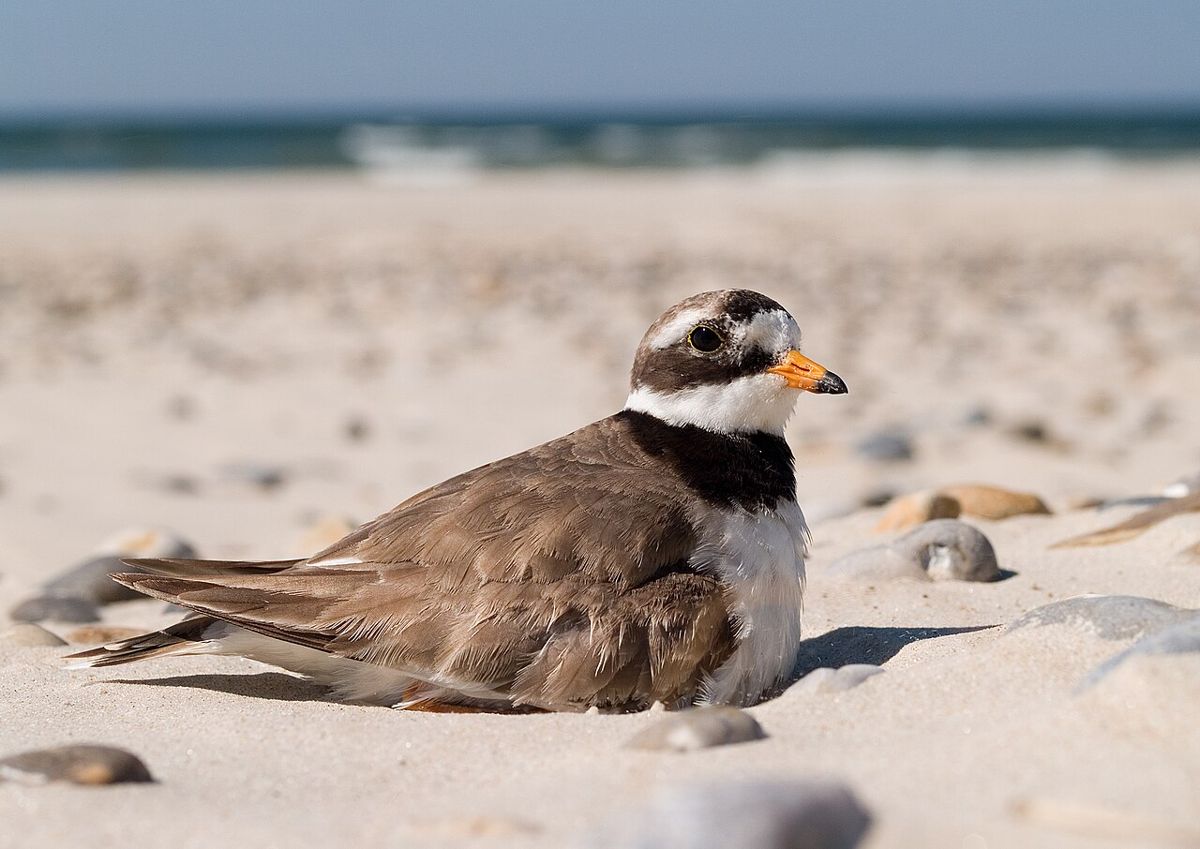
Photo: Arnoldius · CC BY-SA 3.0 (May be cropped or resized)
Charadrius hiaticula
Basic stats
Diet
Insects, crustaceans, and worms
Habitat
Open beaches, flats, sparsely vegetated uplands, tidal flats, and fields
Range
Breeds across northern Eurasia, Greenland, and Arctic northeastern Canada; winters southward on coasts
Clutch size
3–4 eggs
Incubation period
21–27 days
Size
17–19.5cm
Wingspan
35–41cm
The Common Ringed Plover is a compact shorebird, 17–19.5 centimetres long with a 35–41-centimetre wingspan. Adults have grey-brown upperparts, white underparts, a single black breast band, brown cap, white forehead, black eye mask, and short orange-and-black bill. Orange legs and the absence of a conspicuous yellow eye-ring help separate it from Little Ringed Plover. Juveniles are duller, with a broken grey-brown breast band, dark bill, and muted yellow-grey legs. (Wikipedia, Common Ringed Plover account)
Breeding occurs on open beaches, flats, and sometimes sparsely vegetated inland uplands across northern Eurasia, Greenland, and Arctic northeastern Canada. Migrants winter mainly on coasts farther south. A territorial pair makes a shallow ground scrape lined with pebbles and vegetation and lays three or four eggs; both parents incubate for 21–27 days and tend the precocial chicks. Birds forage by sight on beaches, tidal flats, and fields, taking insects, crustaceans, and worms, sometimes trembling a foot to expose prey. (Wikipedia, Common Ringed Plover account)
Quick answers
- What does the Common Ringed Plover eat?
- Insects, crustaceans, and worms
- What habitat does the Common Ringed Plover live in?
- Open beaches, flats, sparsely vegetated uplands, tidal flats, and fields
- Where is the Common Ringed Plover found?
- Breeds across northern Eurasia, Greenland, and Arctic northeastern Canada; winters southward on coasts
- How many eggs does the Common Ringed Plover lay?
- 3–4 eggs
- How long are the eggs of the Common Ringed Plover incubated?
- 21–27 days
- How big is the Common Ringed Plover?
- 17–19.5cm
- What is the wingspan of the Common Ringed Plover?
- 35–41cm