
 Wildlife
of Mongolia
Bluethroat
Muscicapidae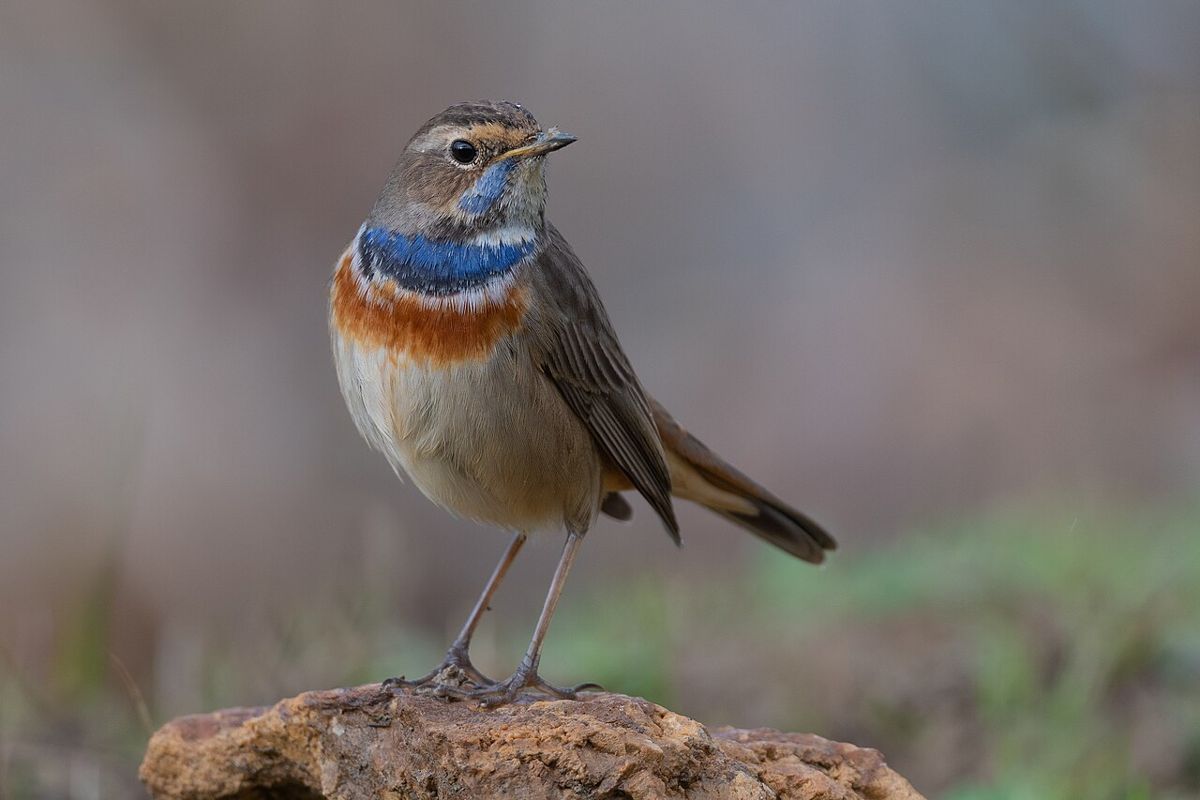
Photo: El Golli Mohamed · CC BY-SA 4.0 (May be cropped or resized)
Luscinia svecica
Basic stats
Diet
Insects
Habitat
Wet birch wood or bushy swamp; nests in tussocks or low in dense bushes
Range
Breeds in Europe and across the Palearctic, with a foothold in western Alaska; winters in Iberia, northern Africa and southern Asia
Size
13–14cm
The bluethroat is similar in size to a European robin, 13–14 centimetres long, and plain brown above except for a distinctive tail that is brown with black outer corners and red basal side patches. Eleven subspecies are accepted by the IOC, though only seven by one other authority. They differ in the extent and intensity of the blue on the male's throat, in whether the blue holds a central spot and what colour it is, and also in breeding habitat and ecology. (Wikipedia, general species account)
A migratory insect-eater, it breeds in wet birch wood or bushy swamp across Europe and the Palearctic, nesting in tussocks or low in dense bushes. The red-spotted form breeds in subarctic shrub tundra from Scandinavia east to western Alaska and winters in southern Asia, in India, Pakistan and the Middle East, while the form namnetum breeds in lowland reedbeds in western France. Birds winter in the Iberian Peninsula, the northern half of Africa and southern Asia. (Wikipedia, general species account)
Quick answers
- What does the Bluethroat eat?
- Insects
- What habitat does the Bluethroat live in?
- Wet birch wood or bushy swamp; nests in tussocks or low in dense bushes
- Where is the Bluethroat found?
- Breeds in Europe and across the Palearctic, with a foothold in western Alaska; winters in Iberia, northern Africa and southern Asia
- How big is the Bluethroat?
- 13–14cm