
 Wildlife
of Mongolia
Alpine Accentor
Prunellidae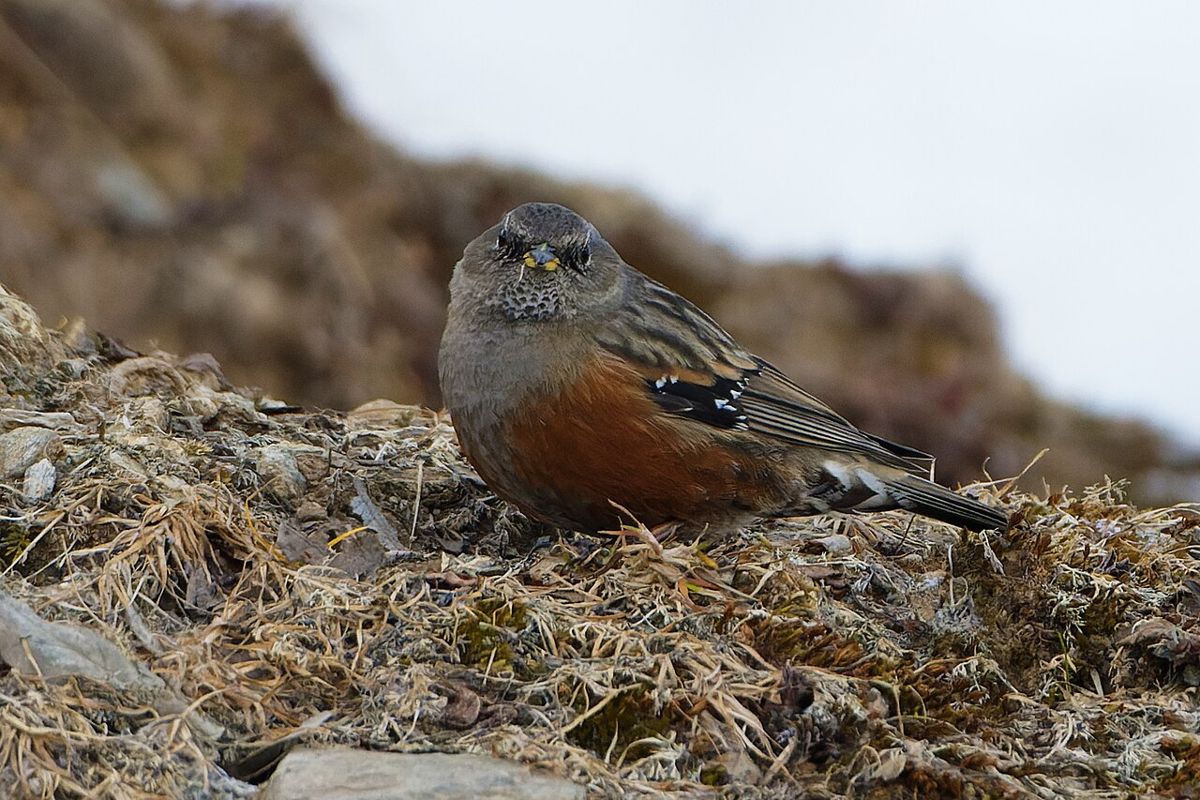
Photo: Shiv's fotografia · CC BY-SA 4.0 (May be cropped or resized)
Prunella collaris
Basic stats
Diet
Insects and other small invertebrates, with seeds also taken
Habitat
Bare mountain country with low vegetation, generally above 2,000m
Range
Mountains of southern temperate Europe, North Africa, and Asia
Clutch size
3–5 eggs
Size
15–17.5cm
The Alpine Accentor is a robin-sized mountain passerine, 15–17.5 centimetres long. Adults have a fine pointed bill, a streaked brown back, an all-grey head, and red-brown spotting along the underparts. The sexes are broadly similar, although males can appear more strongly contrasted; juveniles are browner on the head and below. Its larger size, grey head, warm flank markings, and high-altitude setting help distinguish it from the smaller, more uniformly brown dunnock and from other accentors. (Wikipedia, Alpine Accentor account)
This accentor inhabits bare mountain landscapes with patches of low vegetation across southern temperate Europe, North Africa, and Asia, generally above 2,000 metres. It is mainly resident, although some birds descend or wander more widely in winter. A neat nest is built low in a bush or rock crevice and holds three to five unspotted sky-blue eggs. Breeding groups can contain several males and females, with both sexes mating multiply; adults forage for insects and other small invertebrates and also take seeds. (Wikipedia, Alpine Accentor account)
Quick answers
- What does the Alpine Accentor eat?
- Insects and other small invertebrates, with seeds also taken
- What habitat does the Alpine Accentor live in?
- Bare mountain country with low vegetation, generally above 2,000m
- Where is the Alpine Accentor found?
- Mountains of southern temperate Europe, North Africa, and Asia
- How many eggs does the Alpine Accentor lay?
- 3–5 eggs
- How big is the Alpine Accentor?
- 15–17.5cm