
 Wildlife
of Mongolia
Willow Warbler
Phylloscopidae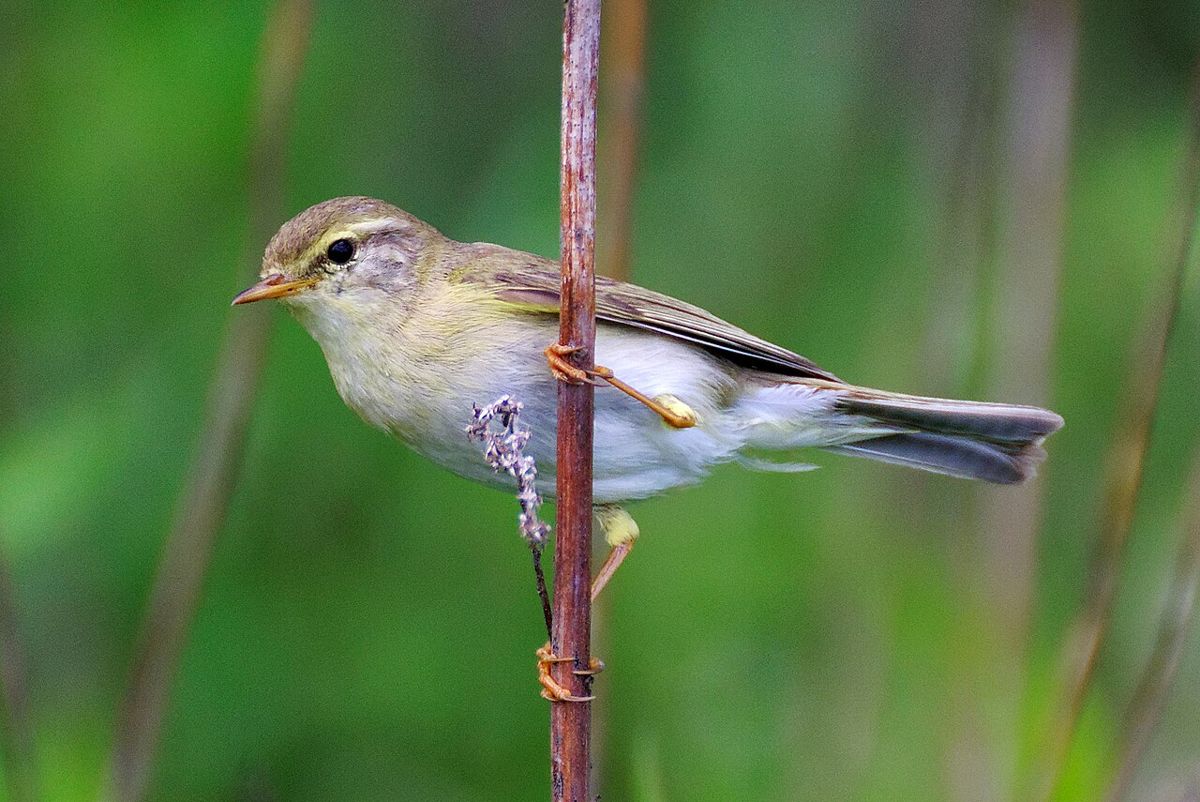
Photo: Jakub Hałun · CC BY-SA 4.0 (May be cropped or resized)
Phylloscopus trochilus
Basic stats
Diet
Insects
Habitat
Open woodland with trees and ground cover, especially birch, alder and willow
Range
Breeds from Ireland across northern and temperate Eurasia to eastern Siberia; winters in sub-Saharan Africa
The willow warbler is a small leaf warbler whose plumage changes gradually across its enormous breeding range. Western birds show stronger green and yellow tones, central populations are browner, and the easternmost subspecies is predominantly greyish. Three subspecies are recognised. The bird was formally described by Linnaeus in 1758 under a different genus, Motacilla, and later placed in Phylloscopus. That genus name joins Greek words for leaf and watcher, neatly reflecting the bird's close association with foliage. (Wikipedia, general species account)
It breeds across northern and temperate Europe and Asia, from Ireland east to the Anadyr River basin in eastern Siberia. Almost the entire population migrates to sub-Saharan Africa, an exceptionally long journey for such a small bird. Breeding habitat is open woodland that combines trees with ground-level nesting cover, particularly stands containing birch, alder or willow. The nest is normally built close to the ground in low vegetation. Like many small Old World warblers, the willow warbler feeds chiefly on insects. (Wikipedia, general species account)
Quick answers
- What does the Willow Warbler eat?
- Insects
- What habitat does the Willow Warbler live in?
- Open woodland with trees and ground cover, especially birch, alder and willow
- Where is the Willow Warbler found?
- Breeds from Ireland across northern and temperate Eurasia to eastern Siberia; winters in sub-Saharan Africa