
 Wildlife
of Mongolia
Water Rail
Rallidae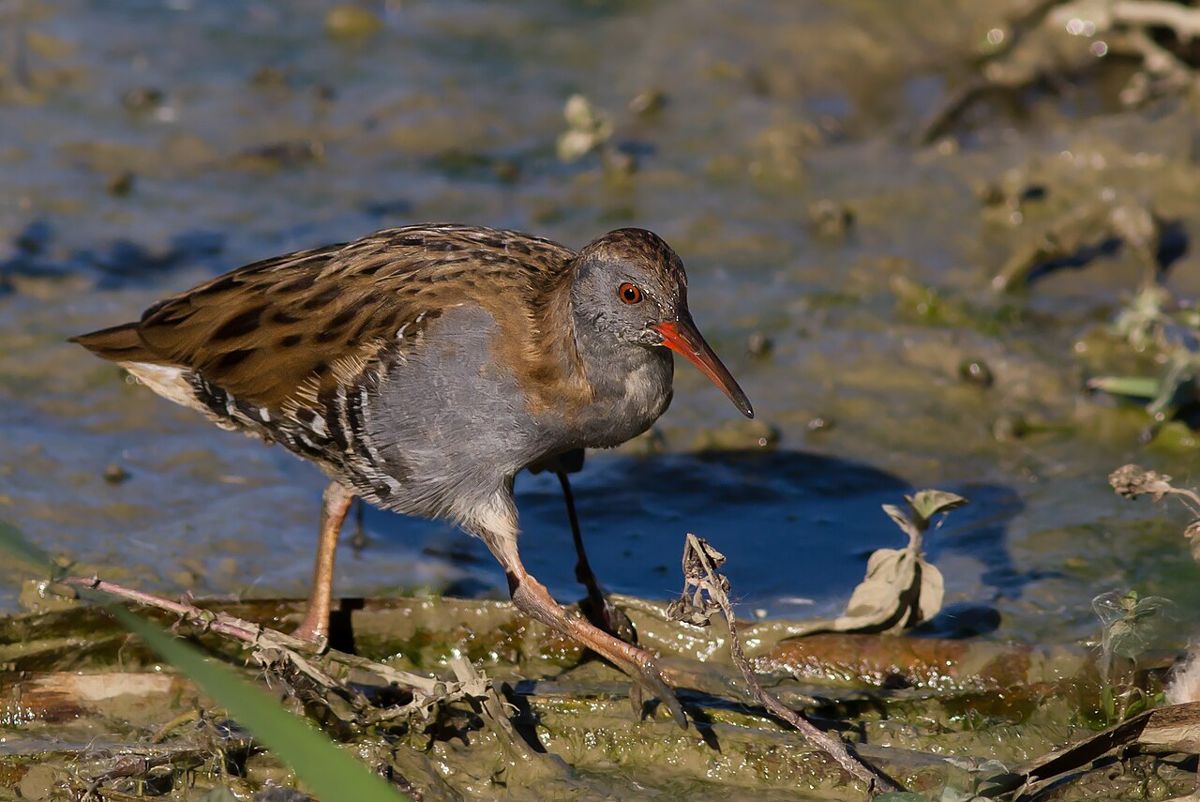
Photo: Pierre Dalous · CC BY-SA 3.0 (May be cropped or resized)
Rallus aquaticus
Basic stats
Diet
Small fish, freshwater shrimps, frogs, snails, insects, larvae, fruit, carrion, and plant material
Habitat
Dense reedbeds and other waterside vegetation around shallow wetlands
Range
Europe, Asia, and North Africa, with northern and eastern birds partly migratory
Clutch size
6–11 eggs
Incubation period
19–22 days
Size
25–28cm
Wingspan
38–45cm
Weight
111–135g
The Water Rail is a secretive wetland bird with a slender, laterally compressed body that slips easily through dense waterside vegetation. Adults have slate-grey faces and underparts, brown upperparts patterned with black, strongly black-and-white-barred flanks, pinkish legs, and a long, thin reddish bill. Juveniles are duller and browner. Measuring about 25–28 centimetres, the species is often detected by its loud squeals and grunts before it is seen, and it usually runs into cover rather than taking flight. (Oiseaux.net, Water Rail account)
Water Rails live among reeds beside shallow ponds, marshes, and rivers, swimming short distances but seldom leaving cover. They probe mud for worms and leeches and take freshwater shrimps, crayfish, insects, small fish, roots, seeds, berries, and sometimes other foods. Nests are concealed close to water in thick vegetation. Females lay six to eleven eggs between March and June and incubate for 19–22 days with some assistance from the male. Young can generally fly after 20–30 days and become independent at about 55 days. (Bird Database, Water Rail account; Oiseaux.net, Water Rail account)
Quick answers
- What does the Water Rail eat?
- Small fish, freshwater shrimps, frogs, snails, insects, larvae, fruit, carrion, and plant material
- What habitat does the Water Rail live in?
- Dense reedbeds and other waterside vegetation around shallow wetlands
- Where is the Water Rail found?
- Europe, Asia, and North Africa, with northern and eastern birds partly migratory
- How many eggs does the Water Rail lay?
- 6–11 eggs
- How long are the eggs of the Water Rail incubated?
- 19–22 days
- How big is the Water Rail?
- 25–28cm
- What is the wingspan of the Water Rail?
- 38–45cm
- How much does the Water Rail weigh?
- 111–135g