
 Wildlife
of Mongolia
Sulphur-bellied Warbler
Phylloscopidae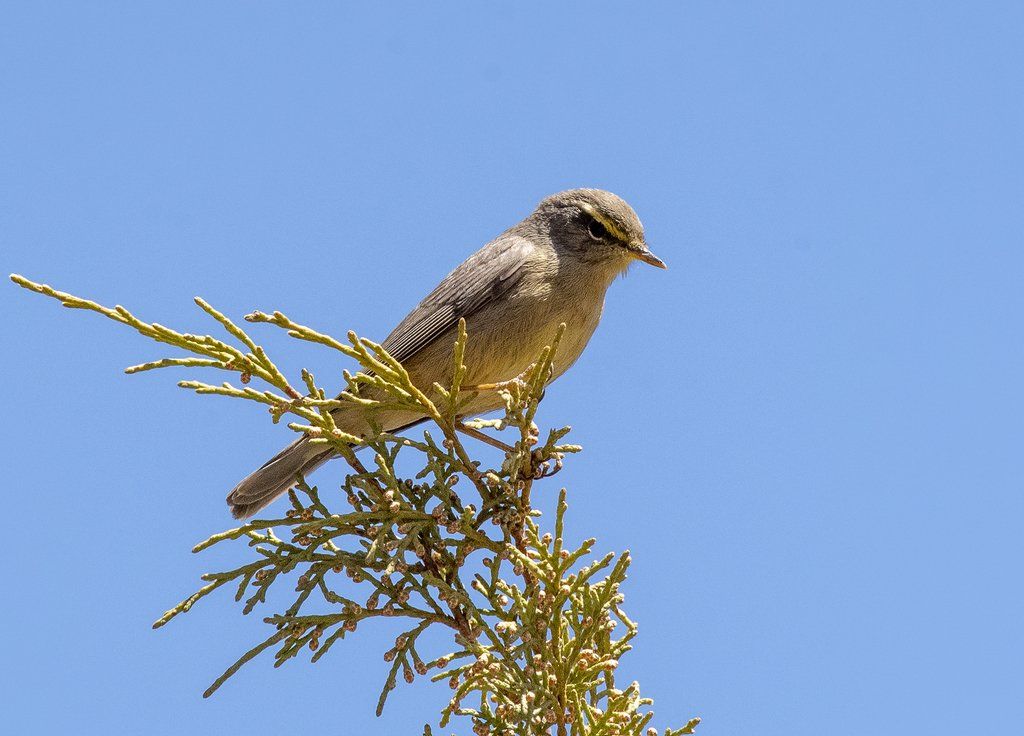
Photo: (c) Нурхайдарова Татьяна, some rights reserved (CC BY) · CC BY 4.0 (May be cropped or resized)
Phylloscopus griseolus
Basic stats
Diet
Small insects, especially small beetles such as weevils, and larvae
Habitat
Dry, stony mountain slopes with low vegetation, scattered juniper and Himalayan pine, mainly at or above the tree line; in winter dense undergrowth in broadleaf woods, stony areas, steep ravines and around old walls or buildings below 1,500m
Range
Breeds on stony mountain slopes; winters at lower levels in India
Clutch size
4–5 eggs
Incubation period
14–17 days
The Sulphur-bellied warbler is a dark Phylloscopus warbler, with dark grey upperparts, a strong yellow eyebrow stripe and brownish-yellow underparts. It lives up to its name of stone warbler by breeding on dry, stony mountain slopes with low vegetation and scattered juniper and Himalayan pine, mainly at or above the tree line. In winter it is seen at lower levels, below 1,500 metres, in dense undergrowth in broadleaf woods but also in stony areas, steep ravines and around old walls or buildings. (Swedish Wikipedia, general species account)
It eats mainly small insects, above all small beetles such as weevils, and larvae, foraging alone or in pairs, mostly on the ground, where it moves like a dunnock. It can also be seen creeping sideways on tree trunks like a treecreeper and along larger branches like a nuthatch. It breeds from late April to early August; the female builds a ball of grass, plant fibres and feathers up to 1.5 metres above the ground in a dense bush and lays four or five eggs incubated for 14–17 days, and both parents feed the young. (Swedish Wikipedia, general species account)
Quick answers
- What does the Sulphur-bellied Warbler eat?
- Small insects, especially small beetles such as weevils, and larvae
- What habitat does the Sulphur-bellied Warbler live in?
- Dry, stony mountain slopes with low vegetation, scattered juniper and Himalayan pine, mainly at or above the tree line; in winter dense undergrowth in broadleaf woods, stony areas, steep ravines and around old walls or buildings below 1,500m
- Where is the Sulphur-bellied Warbler found?
- Breeds on stony mountain slopes; winters at lower levels in India
- How many eggs does the Sulphur-bellied Warbler lay?
- 4–5 eggs
- How long are the eggs of the Sulphur-bellied Warbler incubated?
- 14–17 days