 Wildlife
of Mongolia
Stock Dove
Columbidae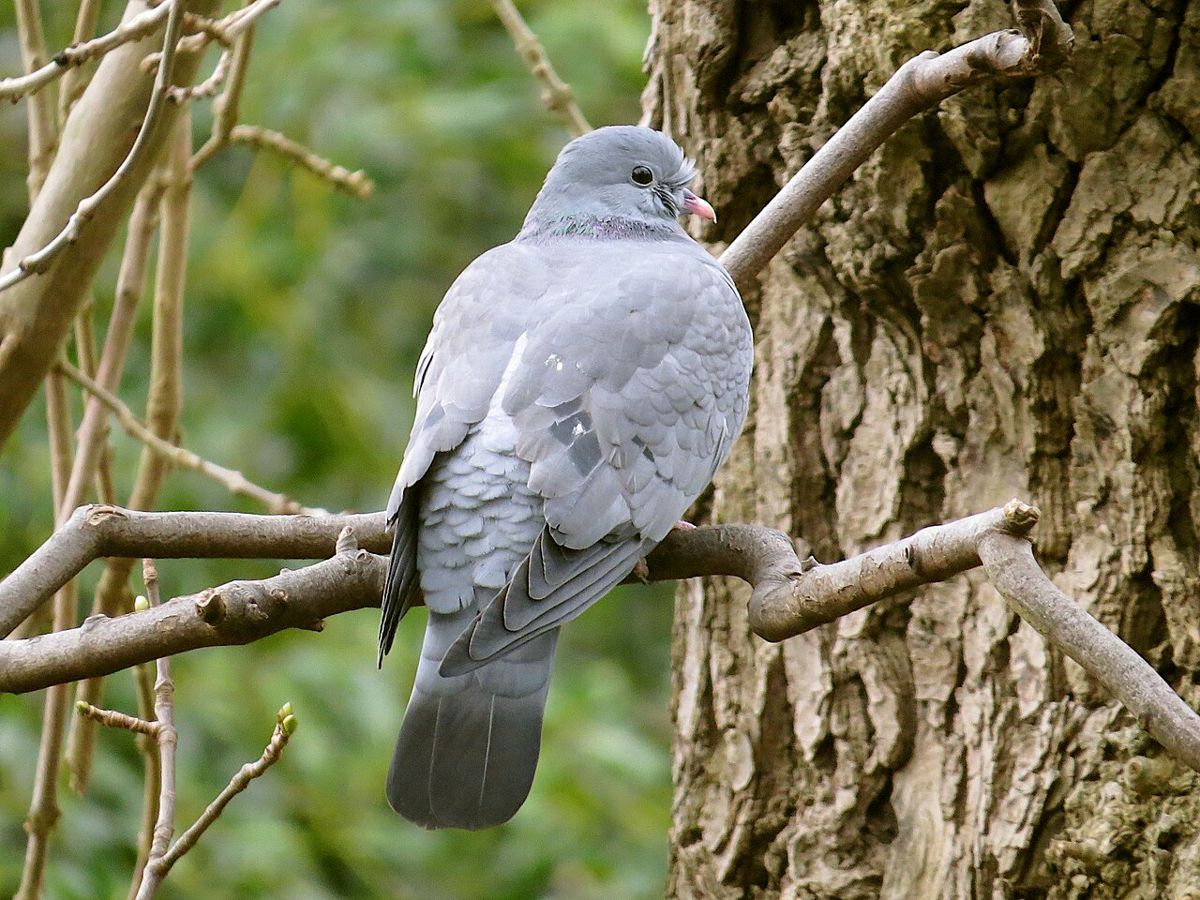
Photo: MPF · CC BY-SA 4.0 (May be cropped or resized)
Columba oenas
Basic stats
Diet
Mainly plant material, including shoots, seedlings, grain, acorns, pine seeds, berries, and legumes; also insects and snails
Habitat
Open woodland and coasts with suitable tree or cliff cavities
Range
Western Palearctic from central Scandinavia south to northwestern Africa and east into Central Asia and western China
Clutch size
Usually 2 eggs
Size
28–34cm
Wingspan
60–66cm
Weight
286–365g
The Stock Dove is a blue-grey pigeon measuring 28–34 centimetres, with a 60–66-centimetre wingspan. It has two short dark wing bars, a broad dark tail tip, a softly pinkish-purple breast, and an iridescent green-to-purple neck patch. Its eyes are dark and its bill is pink with a yellow tip. Unlike the Rock Dove, it has a grey rump and incomplete wing bars; unlike the larger Common Wood Pigeon, it lacks bold white neck and wing markings. (Wikipedia, Stock Dove account)
Stock Doves favour open wooded country and coastal cliffs where cavities are available. They usually nest in old tree holes but also use rabbit burrows, ruins, cliff cracks, dense ivy, and nest boxes. The usual clutch is two eggs. Outside breeding, they form modest flocks and sometimes associate with other pigeons. Feeding takes place largely on the ground, where they take shoots, seedlings, grain, acorns, pine seeds, berries, legumes, insects, and snails. Northeastern populations migrate away from severe winters. (Wikipedia, Stock Dove account)
Quick answers
- What does the Stock Dove eat?
- Mainly plant material, including shoots, seedlings, grain, acorns, pine seeds, berries, and legumes; also insects and snails
- What habitat does the Stock Dove live in?
- Open woodland and coasts with suitable tree or cliff cavities
- Where is the Stock Dove found?
- Western Palearctic from central Scandinavia south to northwestern Africa and east into Central Asia and western China
- How many eggs does the Stock Dove lay?
- Usually 2 eggs
- How big is the Stock Dove?
- 28–34cm
- What is the wingspan of the Stock Dove?
- 60–66cm
- How much does the Stock Dove weigh?
- 286–365g