
 Wildlife
of Mongolia
European Turtle Dove
Columbidae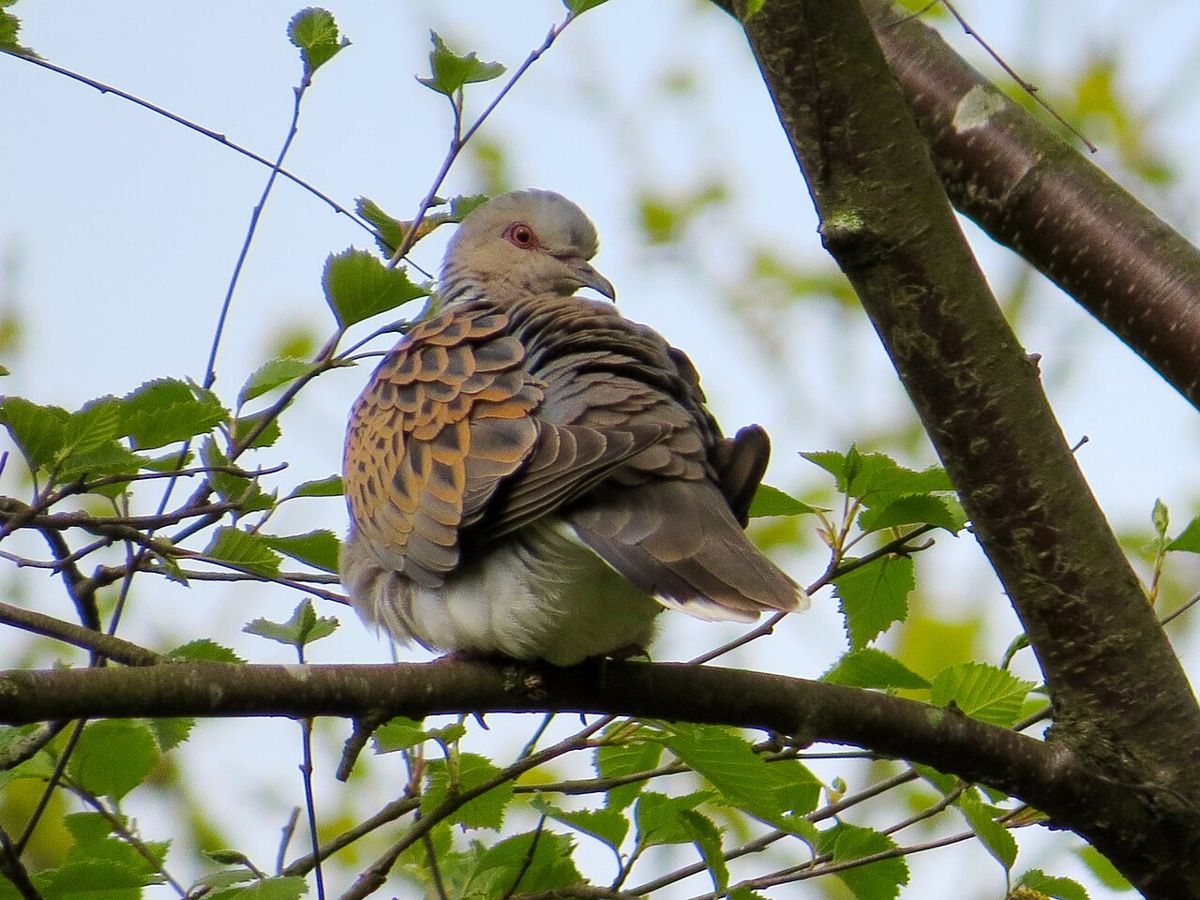
Photo: MPF · CC BY-SA 4.0 (May be cropped or resized)
Streptopelia turtur
Basic stats
Diet
Seeds and grains, including wild plants, wheat, barley, corn, vetch, and sunflower
Habitat
Forest-steppe, woodland edges, orchards, cropland, hedgerows, and shrub thickets
Range
Breeds across much of Europe, western and central Asia, and North Africa; winters in Africa
Clutch size
Usually 2 eggs; range 1–3
Incubation period
14–20 days
Size
27–29cm
Wingspan
47–53cm
Weight
99–170g
The European Turtle Dove is a small, delicately patterned dove 27–29 centimetres long, with a 47–53-centimetre wingspan and mass of 99–170 grams. Adults have scaled grey-brown mantles, dark flight feathers edged narrowly in white, mauve-pink breasts, white bellies, and black-and-white neck patches. Their eyes are pale orange-yellow with broad dark pink rings, while the bill is blackish with a purplish cast. Females may look slightly duller; juveniles are browner, have buff-tipped feathers, and lack the striped neck patch. (Animal Diversity Web, European Turtle Dove account)
European Turtle Doves use forest-steppe, woodland edges, orchards, cropland, hedgerows, and thorny shrub thickets, often foraging on the ground for wild and cultivated seeds. Western Eurasian birds migrate to Africa outside the breeding season. Males collect twigs and other material, and females form a small platform nest in a tree, shrub, or hedge. The usual clutch is two eggs, although one to three are recorded. Both parents incubate for 14–20 days and feed the young crop milk; fledging occurs at about twelve days. (Animal Diversity Web, European Turtle Dove account)
Quick answers
- What does the European Turtle Dove eat?
- Seeds and grains, including wild plants, wheat, barley, corn, vetch, and sunflower
- What habitat does the European Turtle Dove live in?
- Forest-steppe, woodland edges, orchards, cropland, hedgerows, and shrub thickets
- Where is the European Turtle Dove found?
- Breeds across much of Europe, western and central Asia, and North Africa; winters in Africa
- How many eggs does the European Turtle Dove lay?
- Usually 2 eggs; range 1–3
- How long are the eggs of the European Turtle Dove incubated?
- 14–20 days
- How big is the European Turtle Dove?
- 27–29cm
- What is the wingspan of the European Turtle Dove?
- 47–53cm
- How much does the European Turtle Dove weigh?
- 99–170g