
 Wildlife
of Mongolia
Siberian Ibex
Bovidae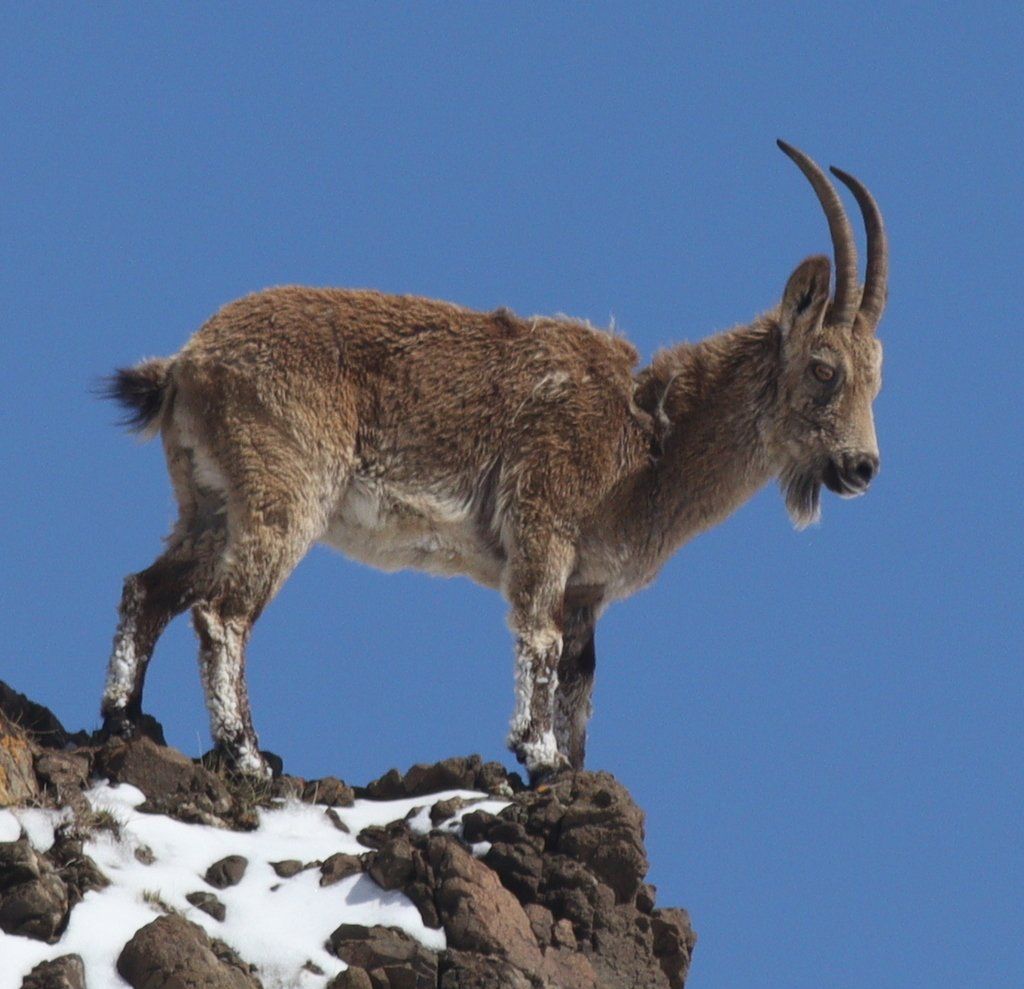
Photo: no rights reserved · CC0
Capra sibirica
Basic stats
Diet
Grasses, sedges, herbs, and seasonal browse
Habitat
Rocky slopes, scree, alpine meadow, and high-altitude steppe
Range
Central and northern Asia, including Mongolia
Litter size
Usually 1; twins sometimes occur
Gestation period
170–180 days
The Siberian ibex is a powerfully built wild goat with a short neck and a coat that varies from tan to dark brown. Both sexes carry horns, but an adult male's are much longer, blackish, strongly ridged, and swept backwards; females are smaller and have shorter grey-brown horns. Mature males may also show a darker dorsal stripe and contrasting pale saddle patches in winter. These proportions and the massive, ridged horns distinguish males from argali, whose horns curl outward in a broad spiral. (Wikipedia, general species account)
Across its range, the species occupies steep rocky slopes, scree, alpine meadow, high-altitude steppe, and some semidesert hills. Mongolia lies within that Central Asian range. Herds commonly separate by sex outside the rut and spend much of the day grazing. Grasses and sedges dominate in spring and summer; winter food includes herbs, twigs, and conifer needles. The rut runs from late October into early January, and females normally bear one kid after a 170–180-day gestation. (Wikipedia, general species account)
Quick answers
- What does the Siberian Ibex eat?
- Grasses, sedges, herbs, and seasonal browse
- What habitat does the Siberian Ibex live in?
- Rocky slopes, scree, alpine meadow, and high-altitude steppe
- Where is the Siberian Ibex found?
- Central and northern Asia, including Mongolia
- What is the litter size of the Siberian Ibex?
- Usually 1; twins sometimes occur
- How long is the gestation period of the Siberian Ibex?
- 170–180 days