
 Wildlife
of Mongolia
Sand Martin
Hirundinidae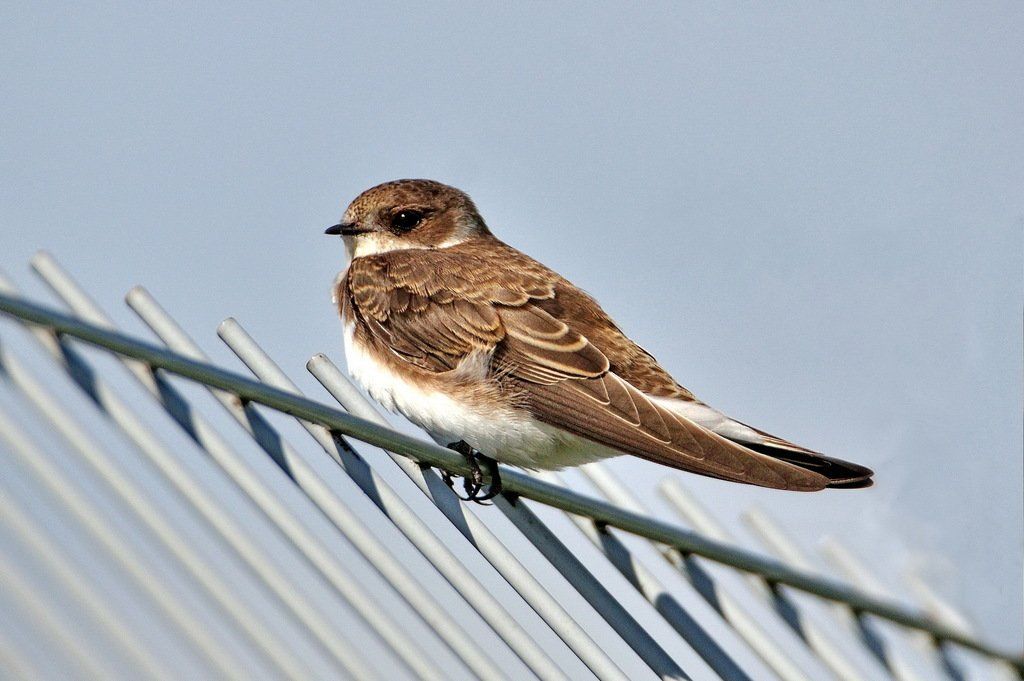
Photo: (c) Viktor N. Chekan, some rights reserved (CC BY) · CC BY 4.0 (May be cropped or resized)
Riparia riparia
Basic stats
Habitat
Near rivers, lakes or the sea; nests in burrows in sandy banks, favouring loess
Range
Holarctic in summer, across Europe, Asia and North America; winters in eastern and southern Africa, southern Asia and South America
The sand martin is brown above and white below, with a narrow brown band across the breast, a black bill and brown legs. Young birds have rufous tips to the coverts and margins to the secondaries. The brown back and breast band, white throat, small size and quick, jerky flight separate it from similar swallows such as the common house martin, the American cliff swallow and the tree swallow. In North America it is called the bank swallow. (Wikipedia, general species account)
A migratory swallow, it has a wide summer range covering practically the whole Holarctic, from Europe across Asia to the Pacific and throughout North America, and winters in eastern and southern Africa, southern Asia and South America. It nests in burrows in sandy hills and banks, and has been observed to favour loess as a nesting ground. It is generally found near larger bodies of water such as rivers, lakes or even the sea throughout the year. (Wikipedia, general species account)
Quick answers
- What habitat does the Sand Martin live in?
- Near rivers, lakes or the sea; nests in burrows in sandy banks, favouring loess
- Where is the Sand Martin found?
- Holarctic in summer, across Europe, Asia and North America; winters in eastern and southern Africa, southern Asia and South America