 Wildlife
of Mongolia
Pale Martin
Hirundinidae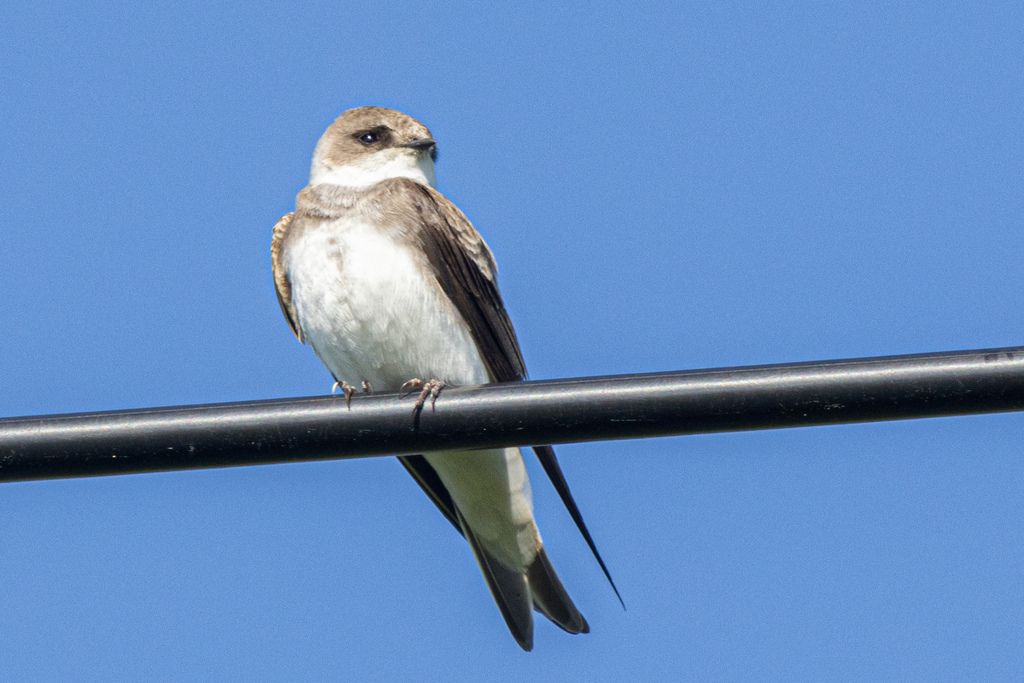
Photo: (c) Антон Лабачоў, some rights reserved (CC BY) · CC BY 4.0 (May be cropped or resized)
Riparia diluta
Basic stats
Habitat
Drier environments on dry steppe, farther from water than the sand martin; nests in colonies in sandbanks
Range
Parts of Asia from Kazakhstan and Pakistan to China; winters in southern Asia; up to 4,500m in the Himalaya
Clutch size
3–4 eggs in India; 4–7 in China
Incubation period
15 days
The pale martin is very like the sand martin but has a paler grey-brown upperside and a less distinct breast band. The two also differ in the contrast of the cheek patch, the degree of tail fork, the amount of feathering on the tarsus and the alarm call. It was formerly treated as part of the sand martin. (Swedish Wikipedia, general species account)
It occurs in parts of Asia from Kazakhstan and Pakistan to China and moves in winter to southern Asia, with a few records west to Kuwait. Compared with the sand martin it breeds in drier environments on dry steppe, farther from water, and in the Himalaya it can be seen up to 4,500 metres. It forages in groups and mixes with other swallows and swifts. Like the sand martin it breeds in small colonies in sandbanks, with up to 150–200 nests; both parents incubate for 15 days and the young fledge after about 23 days. (Swedish Wikipedia, general species account)
Quick answers
- What habitat does the Pale Martin live in?
- Drier environments on dry steppe, farther from water than the sand martin; nests in colonies in sandbanks
- Where is the Pale Martin found?
- Parts of Asia from Kazakhstan and Pakistan to China; winters in southern Asia; up to 4,500m in the Himalaya
- How many eggs does the Pale Martin lay?
- 3–4 eggs in India; 4–7 in China
- How long are the eggs of the Pale Martin incubated?
- 15 days