
 Wildlife
of Mongolia
Red-necked Grebe
Podicipedidae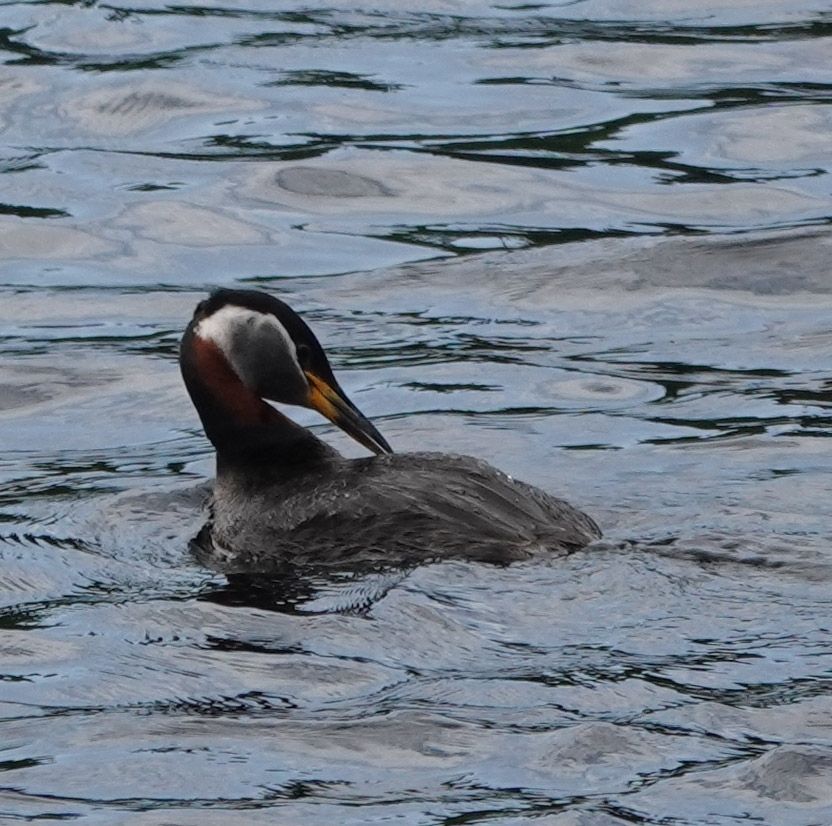
Photo: (c) Roman Titov, some rights reserved (CC BY) · CC BY 4.0 (May be cropped or resized)
Podiceps grisegena
Basic stats
Diet
Fish and aquatic insects
Habitat
Shallow freshwater lakes, marshes and fish ponds when breeding; sheltered coastal water or large lakes in winter
Range
Temperate Northern Hemisphere
Size
40–50cm
The red-necked grebe is a medium-large aquatic bird. In breeding plumage it shows a black cap, pale grey cheeks and throat, rusty-red neck, dark grey back and flanks, and a long dark bill with yellow at the base. Winter birds are much duller, with a diffuse grey cap and whitish or pale-grey front of the neck. Its lobed toes and legs placed near the rear of the body make it an agile swimmer and diver but awkward on land. (Wikipedia, general species account)
Breeding birds favour shallow freshwater lakes, marshes and fish ponds, where a pair anchors a nest of water plants to floating vegetation. Courtship includes conspicuous paired displays and loud wailing calls. The grebe dives for fish and also takes aquatic insects from vegetation; like other grebes it swallows feathers, possibly helping protect its digestive tract. Migrants spend winter mainly on calm coastal water beyond the surf, although some remain on large inland lakes. Danger is usually met by diving rather than flight. (Wikipedia, general species account)
Quick answers
- What does the Red-necked Grebe eat?
- Fish and aquatic insects
- What habitat does the Red-necked Grebe live in?
- Shallow freshwater lakes, marshes and fish ponds when breeding; sheltered coastal water or large lakes in winter
- Where is the Red-necked Grebe found?
- Temperate Northern Hemisphere
- How big is the Red-necked Grebe?
- 40–50cm