
 Wildlife
of Mongolia
Little Gull
Laridae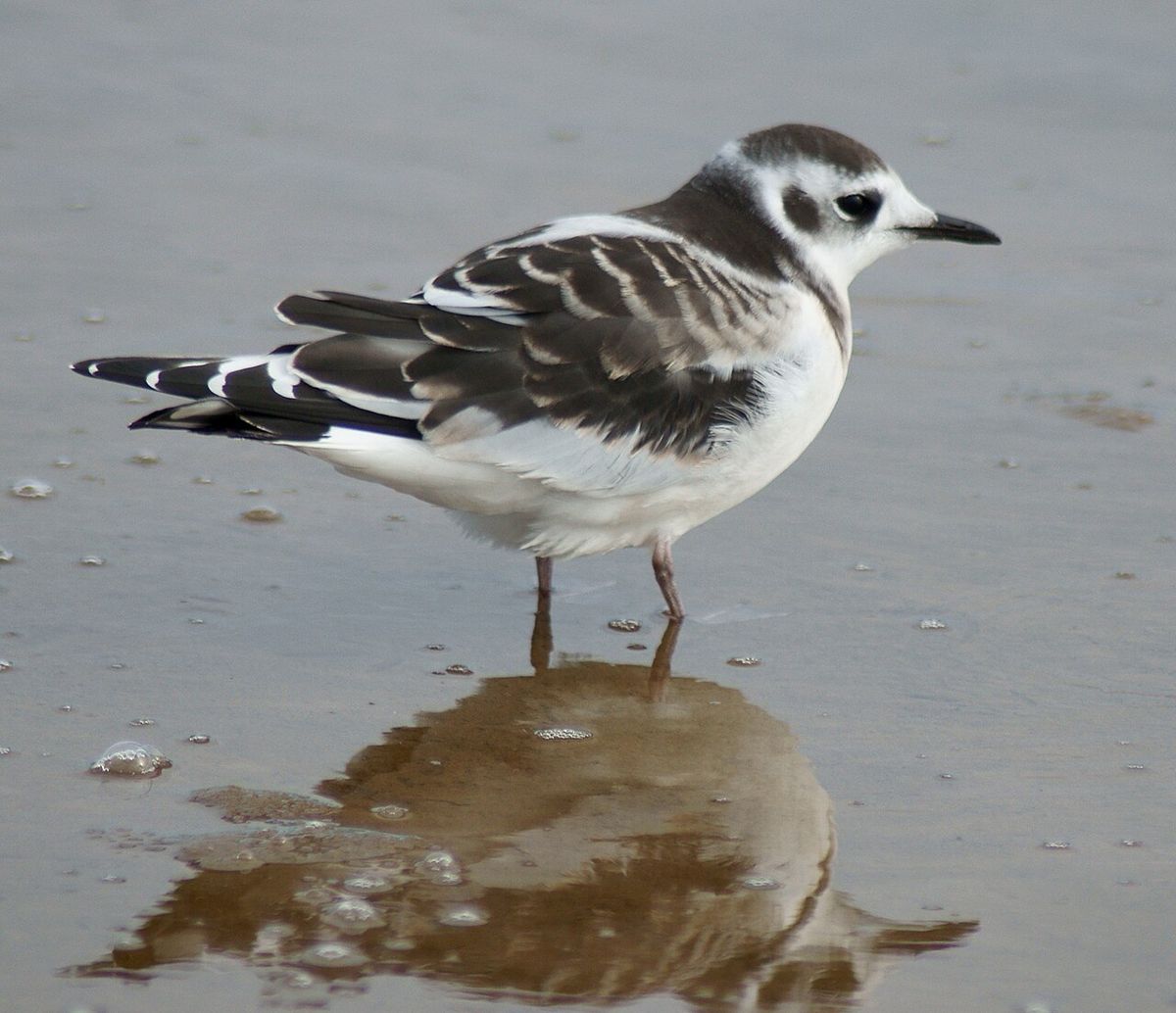
Photo: kallerna · CC BY-SA 3.0 (May be cropped or resized)
Hydrocoloeus minutus
Basic stats
Diet
Breeding birds eat insects; winter diet includes small fish and marine invertebrates
Habitat
Vegetated shallow freshwater for breeding; coasts and open sea in winter
Range
Mainly Palearctic, with small North American breeding colonies
Size
24–28cm
Wingspan
62–69cm
The little gull is a compact gull measuring 24–28 centimetres long with a 62–69-centimetre wingspan. Breeding adults have a black hood, dark red bill, red legs and sometimes a pinkish wash beneath. Outside the breeding season, the head pattern contracts to a black cap and ear spot. Adults retain pale grey upperparts, white primaries and very dark grey underwings in every plumage. Juveniles instead show blackish areas above and a dark W-shaped upperwing pattern in flight. (Wikipedia, general species account)
Breeding occurs mainly across the Palearctic, from northern Scandinavia and the eastern Baltic to eastern Siberia, with smaller colonies around North America's Great Lakes. Nests are placed among dense emergent or floating vegetation beside shallow fresh water, marshes, bogs or slow rivers. Birds often join mixed gull and tern colonies, while nonbreeders feed and rest socially. During breeding they catch insects near the water; in winter, when many move to coasts and the open sea, small fish and marine invertebrates dominate. (Wikipedia, general species account)
Quick answers
- What does the Little Gull eat?
- Breeding birds eat insects; winter diet includes small fish and marine invertebrates
- What habitat does the Little Gull live in?
- Vegetated shallow freshwater for breeding; coasts and open sea in winter
- Where is the Little Gull found?
- Mainly Palearctic, with small North American breeding colonies
- How big is the Little Gull?
- 24–28cm
- What is the wingspan of the Little Gull?
- 62–69cm