
 Wildlife
of Mongolia
Caspian Tern
Laridae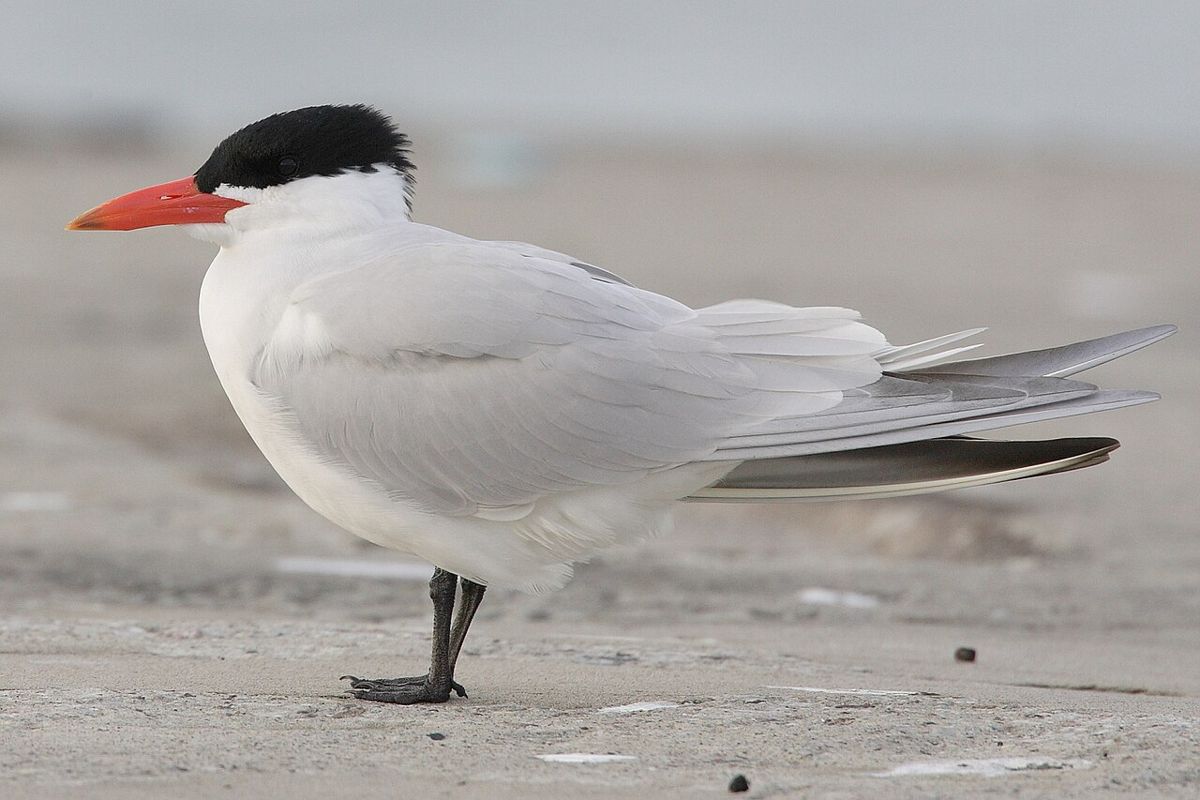
Photo: Mdf · CC BY-SA 3.0 (May be cropped or resized)
Hydroprogne caspia
Basic stats
Diet
Mainly fish
Habitat
Coasts and large inland lakes and rivers
Size
48–60cm
Wingspan
127–145cm
The Caspian tern is the world's largest tern, built with broad wings, a shallowly forked tail and a massive red-orange bill marked with a dark tip. Adults are pale grey above and white below, with a black cap in breeding plumage; the forehead becomes streaked and paler outside the breeding season. Its size, heavy bill and slower, more powerful wingbeats readily separate it from the smaller, slimmer terns sharing inland waters. (Wikipedia, Caspian tern account)
Caspian terns occur on coasts and around large inland lakes and rivers across a broad, discontinuous world range. They feed mainly on fish, flying over open water before plunging to capture prey near the surface. Breeding may be solitary or colonial, with nests placed on open beaches, islands or sparsely vegetated ground. Many populations migrate after nesting. Birds can range well away from a colony while feeding, so individuals seen inland need not indicate a nearby nesting site. (Wikipedia, Caspian tern account)
Quick answers
- What does the Caspian Tern eat?
- Mainly fish
- What habitat does the Caspian Tern live in?
- Coasts and large inland lakes and rivers
- How big is the Caspian Tern?
- 48–60cm
- What is the wingspan of the Caspian Tern?
- 127–145cm