
 Wildlife
of Mongolia
Lesser Grey Shrike
Laniidae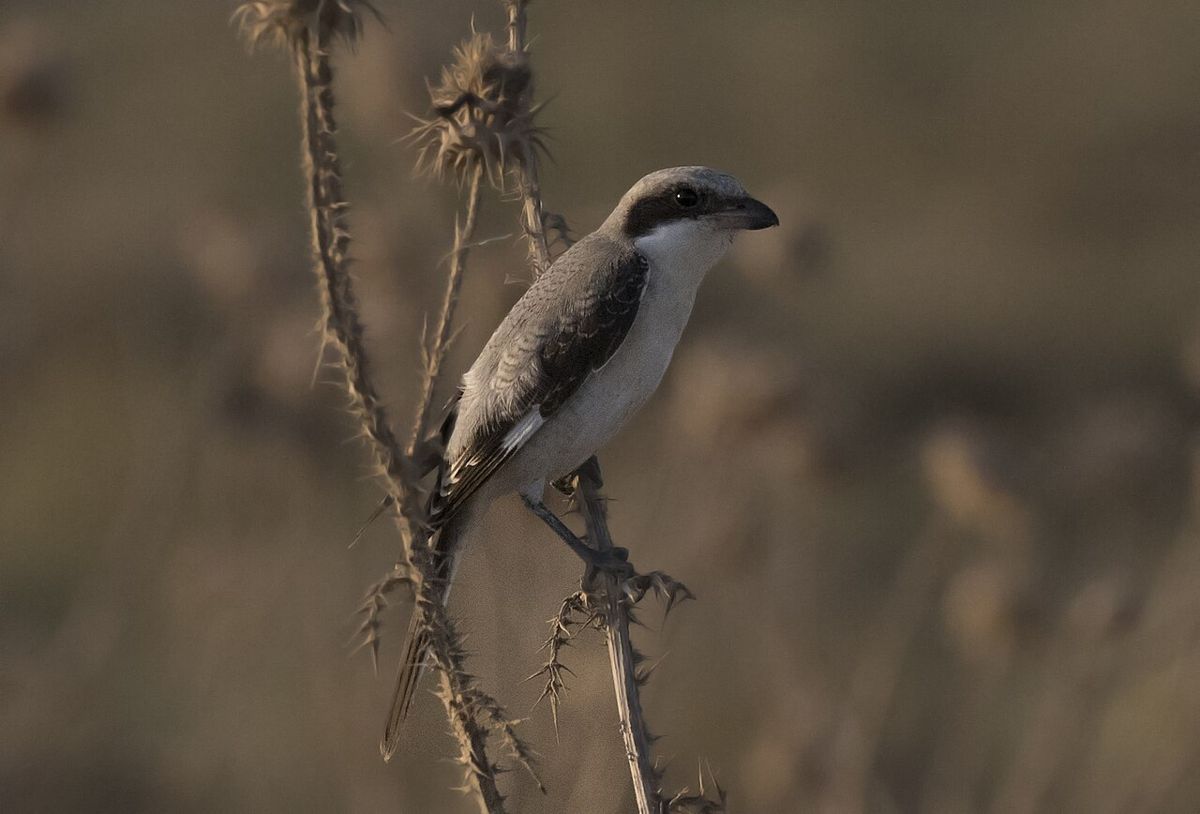
Photo: Zeynel Cebeci · CC BY-SA 4.0 (May be cropped or resized)
Lanius minor
Basic stats
Diet
Large insects, especially beetles, butterflies, moths and grasshoppers
Habitat
Dry open lowlands with prominent perches
Range
Breeds in south-central Europe and western Asia; winters in southern Africa
The lesser grey shrike is a medium-sized predatory songbird patterned mainly in grey, black and white. Both sexes show a black face mask, while adult males have a pinkish wash across the underparts. It resembles the great grey and Iberian grey shrikes but is slightly smaller, with a black forehead and proportionately longer wings. Its upright stance on exposed perches is characteristic. Dry open lowlands with scattered lookout points, including roadside wires, provide the setting in which it is most readily noticed. (Wikipedia, general species account)
This shrike breeds in south-central Europe and western Asia, migrating in early autumn to wintering grounds in southern Africa and returning in spring. It feeds chiefly on large insects, especially beetles, butterflies, moths and grasshoppers. Hunting birds watch from prominent perches and may hover above the ground during the breeding season. Like other shrikes, they sometimes impale captured prey on thorns or barbed wire, creating a temporary food store. Such behaviour allows a passerine without powerful raptor feet to handle relatively large prey. (Wikipedia, general species account)
Quick answers
- What does the Lesser Grey Shrike eat?
- Large insects, especially beetles, butterflies, moths and grasshoppers
- What habitat does the Lesser Grey Shrike live in?
- Dry open lowlands with prominent perches
- Where is the Lesser Grey Shrike found?
- Breeds in south-central Europe and western Asia; winters in southern Africa