
 Wildlife
of Mongolia
Eurasian Wryneck
Picidae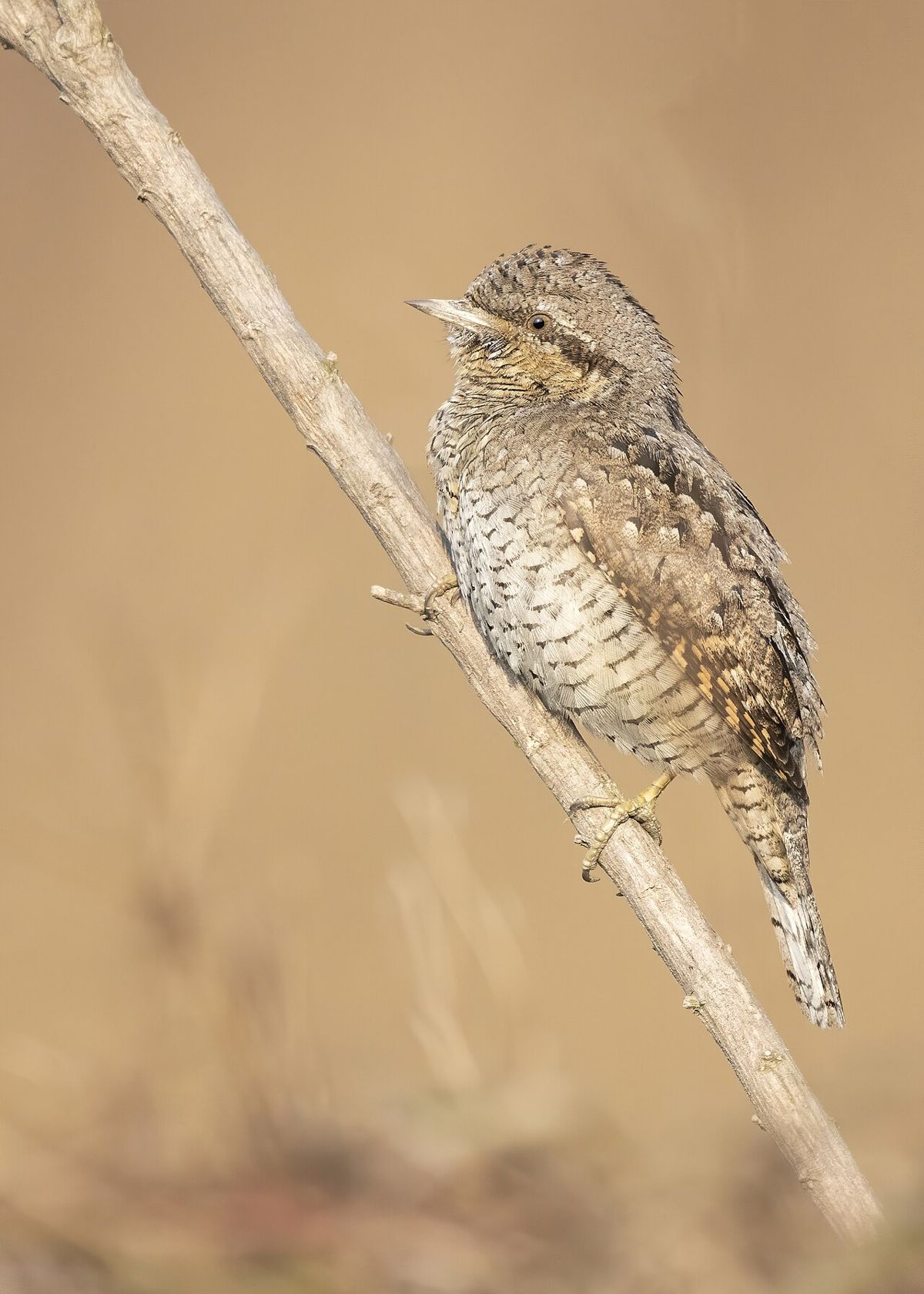
Photo: Prasan Shrestha · CC BY-SA 4.0 (May be cropped or resized)
Jynx torquilla
Basic stats
Diet
Ants and other insects
Habitat
Open countryside, woodland and orchards
Range
Breeds across temperate Europe and Asia; winters in Africa and southern Asia
Clutch size
7–10 eggs
Size
16–18 cm
The Eurasian wryneck is an unusual member of the woodpecker family, measuring about sixteen to eighteen centimetres and carrying a shorter, less dagger-like bill than typical woodpeckers. Its upperparts are intricately barred and mottled in pale brown, rufous and blackish tones, with broader dark streaks, while the cream underparts are spotted and speckled brown. This bark-like pattern provides strong camouflage. The name refers to its ability to twist its head dramatically; a disturbed nesting bird combines snake-like neck movements with hissing as a threat display. (Wikipedia, general species account)
Wrynecks breed mainly across temperate Europe and Asia, with most populations migrating to tropical Africa or southern Asia for winter. They use open countryside, woodland and orchards rather than relying on dense forest. Ants are their chief prey, supplemented by other insects found on the ground or in decaying wood. Unlike woodpeckers that excavate substantial cavities, the species nests in holes. During May and June it lays seven to ten white eggs, a colour common among cavity-nesting birds whose eggs remain concealed from direct daylight. (Wikipedia, general species account)
Quick answers
- What does the Eurasian Wryneck eat?
- Ants and other insects
- What habitat does the Eurasian Wryneck live in?
- Open countryside, woodland and orchards
- Where is the Eurasian Wryneck found?
- Breeds across temperate Europe and Asia; winters in Africa and southern Asia
- How many eggs does the Eurasian Wryneck lay?
- 7–10 eggs
- How big is the Eurasian Wryneck?
- 16–18 cm