
 Wildlife
of Mongolia
Eurasian Wild Pig
Suidae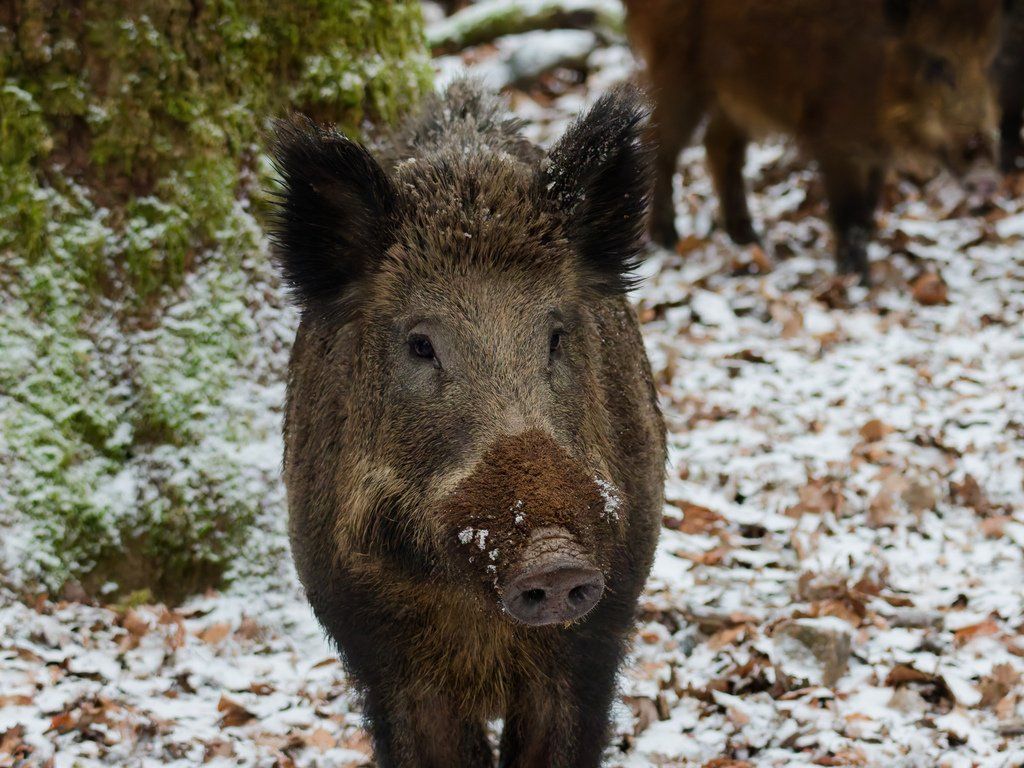
Photo: (c) Donald Davesne, some rights reserved (CC BY) · CC BY 4.0 (May be cropped or resized)
Sus scrofa
Basic stats
Diet
Omnivorous; roots, tubers, seeds, fruit, shoots, invertebrates, and small vertebrates
Habitat
Dense cover near water, from forest and wetland to steppe margins
Range
Native across much of Eurasia and North Africa
Litter size
Usually 4–6
Gestation period
114–140 days
The wild boar is a heavily built pig with short legs, a large wedge-shaped head, a thick neck, and a raised shoulder region. Coarse winter bristles cover a dense brown undercoat, and adult males develop a mane along the back and prominent canine tusks. Piglets are readily recognised by their pale longitudinal stripes. Size and colour vary greatly across the enormous native range, so measurements from European or Far Eastern populations are not applied to Mongolia here. The head and strong neck are adapted for rooting and turning soil. (Wikipedia, general species account)
Wild boar are versatile omnivores, digging for roots, bulbs, tubers, seeds, and buried animals while also eating fruit, shoots, invertebrates, eggs, small vertebrates, and carrion. Females and young live in matriarchal groups called sounders; mature males are normally solitary outside the breeding season. Suitable habitat combines dense shelter, access to drinking and wallowing water, and manageable winter snow. The account describes Transbaikalian animals as concentrated in river valleys with shrubs and nut pine, but it does not provide a Mongolia-specific locality. Litters commonly contain four to six piglets. (Wikipedia, general species account)
Quick answers
- What does the Eurasian Wild Pig eat?
- Omnivorous; roots, tubers, seeds, fruit, shoots, invertebrates, and small vertebrates
- What habitat does the Eurasian Wild Pig live in?
- Dense cover near water, from forest and wetland to steppe margins
- Where is the Eurasian Wild Pig found?
- Native across much of Eurasia and North Africa
- What is the litter size of the Eurasian Wild Pig?
- Usually 4–6
- How long is the gestation period of the Eurasian Wild Pig?
- 114–140 days