
 Wildlife
of Mongolia
Barred Warbler
Sylviidae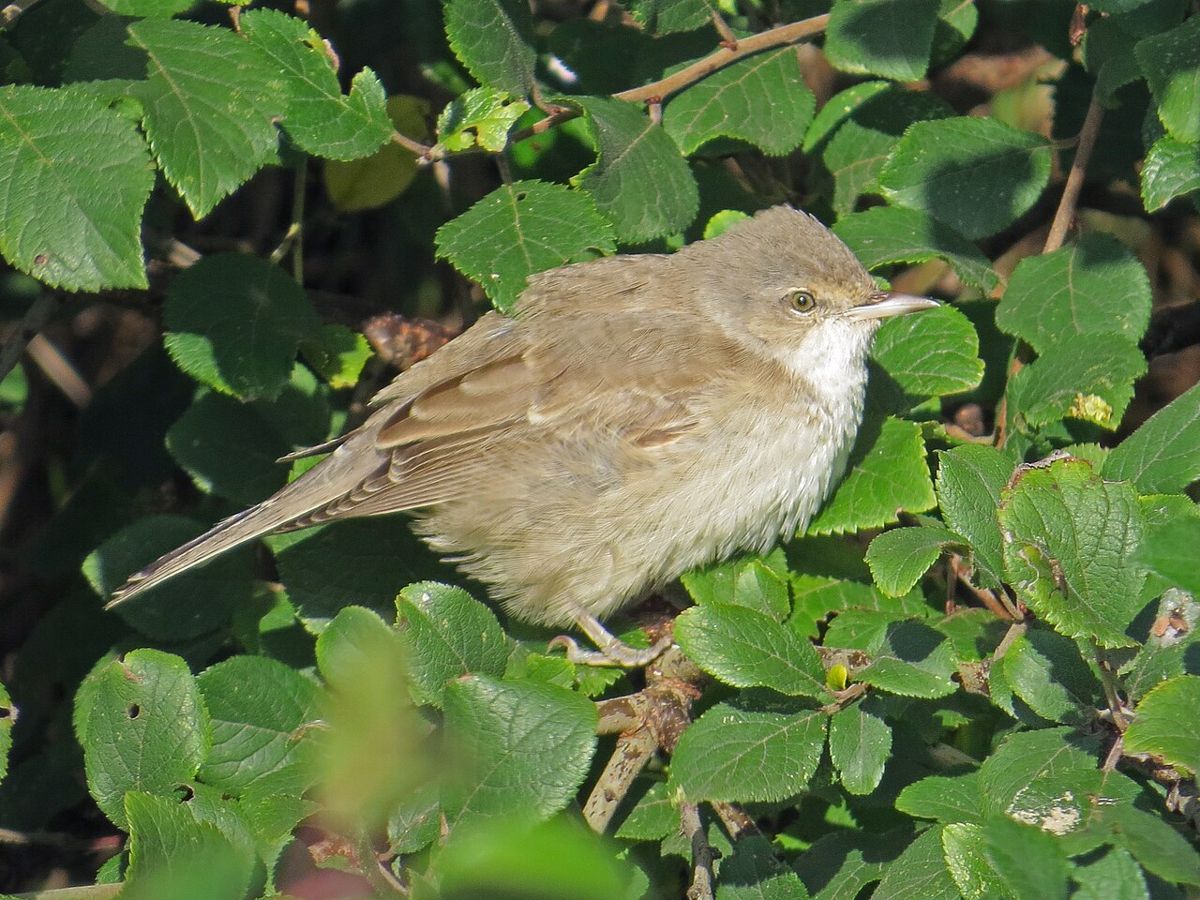
Photo: MPF · CC BY-SA 4.0 (May be cropped or resized)
Curruca nisoria
Basic stats
Diet
Mainly insects; berries and soft fruit in late summer and autumn
Habitat
Open country with bushes for nesting; nest in low shrub or brambles
Range
Breeds across temperate central and eastern Europe and western and central Asia; winters in tropical eastern Africa
Clutch size
3–7 eggs
Size
15.5–17cm
Weight
22–36g
The barred warbler is the largest Curruca warbler, 15.5–17 centimetres long and 22–36 grams, mainly grey above and whitish below. Adult males are dark grey above with white tips to the wing coverts and tail feathers, and heavily barred below. The female is similar but slightly paler, with only light barring. The song is a pleasant chattering like a garden warbler's with many clear notes, but harsher and less melodious, slightly higher pitched, with some resemblance to the common whitethroat's. (Wikipedia, general species account)
This strongly migratory passerine breeds across temperate regions of central and eastern Europe and western and central Asia and winters in tropical eastern Africa. It is a bird of open country with bushes for nesting, with habitat preferences very similar to the red-backed shrike's. The nest is built in low shrub or brambles and holds three to seven eggs. Like most warblers it is mainly insect-eating, but it also takes berries and soft fruit extensively in late summer and autumn. (Wikipedia, general species account)
Quick answers
- What does the Barred Warbler eat?
- Mainly insects; berries and soft fruit in late summer and autumn
- What habitat does the Barred Warbler live in?
- Open country with bushes for nesting; nest in low shrub or brambles
- Where is the Barred Warbler found?
- Breeds across temperate central and eastern Europe and western and central Asia; winters in tropical eastern Africa
- How many eggs does the Barred Warbler lay?
- 3–7 eggs
- How big is the Barred Warbler?
- 15.5–17cm
- How much does the Barred Warbler weigh?
- 22–36g