
 Wildlife
of Mongolia
Asian Badger
Mustelidae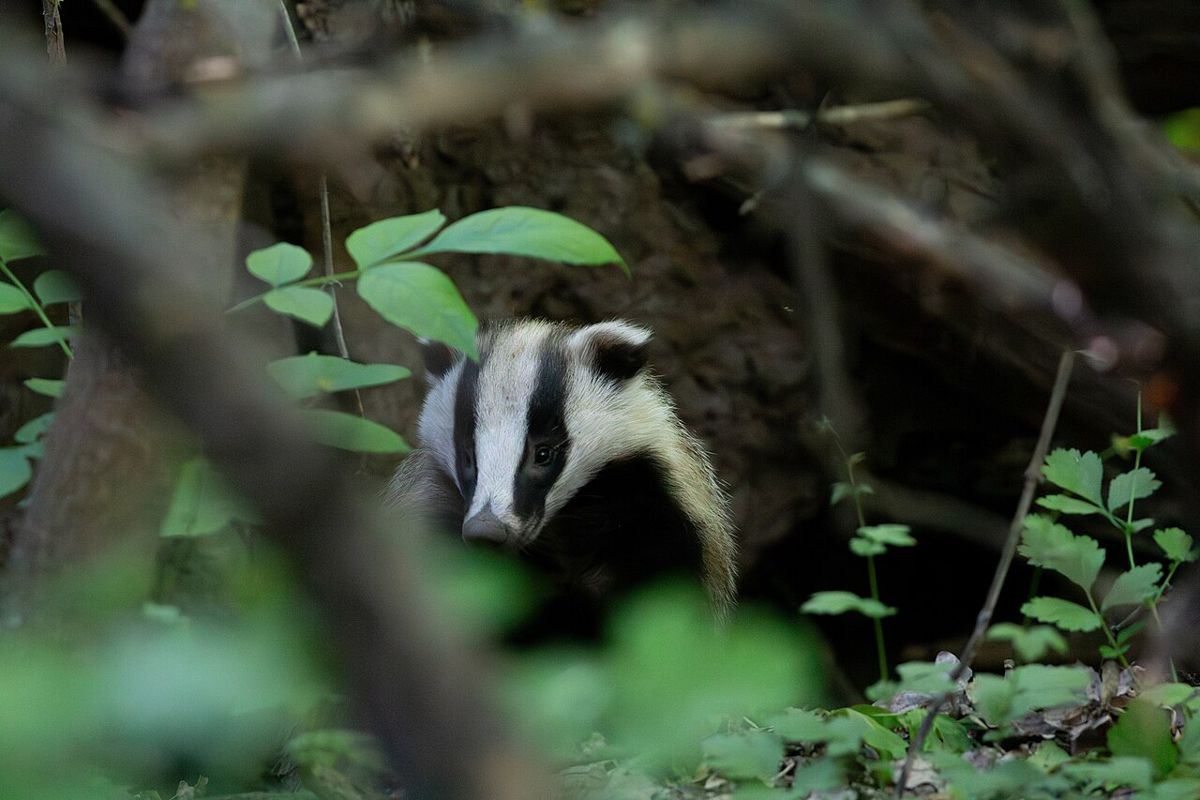
Photo: Алина Урусова · CC BY 4.0 (May be cropped or resized)
Meles leucurus
Basic stats
Habitat
Open deciduous woodland, pasture, mixed forest, shrubland, and steppe
Range
Central and northern Asia, including Mongolia
Size
Typically 50–70cm body length
Weight
Typically 3.5–9kg
The Asian badger, or sand badger, is generally smaller and paler than the European badger. Most animals are brownish grey, with lighter flanks and brown rather than black facial stripes. Those stripes narrow behind the eyes and pass above the ears, while the pale band along the crown is relatively short and narrow. Regional variation is extensive, but body length is commonly 50–70cm and mass roughly 3.5–9kg. Its stocky body, short strong legs, and long foreclaws are adapted for digging. (Wikipedia, general species account)
The species ranges across Mongolia, China, Korea, Kazakhstan, Kyrgyzstan, and Russia. It favours open deciduous woodland adjoining pasture but also uses coniferous and mixed forest, shrubland, steppe, high country, and sometimes suburban margins. Asian badgers are strongly fossorial, although recent camera-trap evidence shows that they can climb trees. The source opened for this entry did not give a dependable species-wide diet or breeding account, so those facts are omitted rather than transferred from European or Japanese badgers. Mongolia-specific viewing sites were likewise not supported. (Wikipedia, general species account)
Quick answers
- What habitat does the Asian Badger live in?
- Open deciduous woodland, pasture, mixed forest, shrubland, and steppe
- Where is the Asian Badger found?
- Central and northern Asia, including Mongolia
- How big is the Asian Badger?
- Typically 50–70cm body length
- How much does the Asian Badger weigh?
- Typically 3.5–9kg