 Wildlife
of Mongolia
Red-throated Pipit
Motacillidae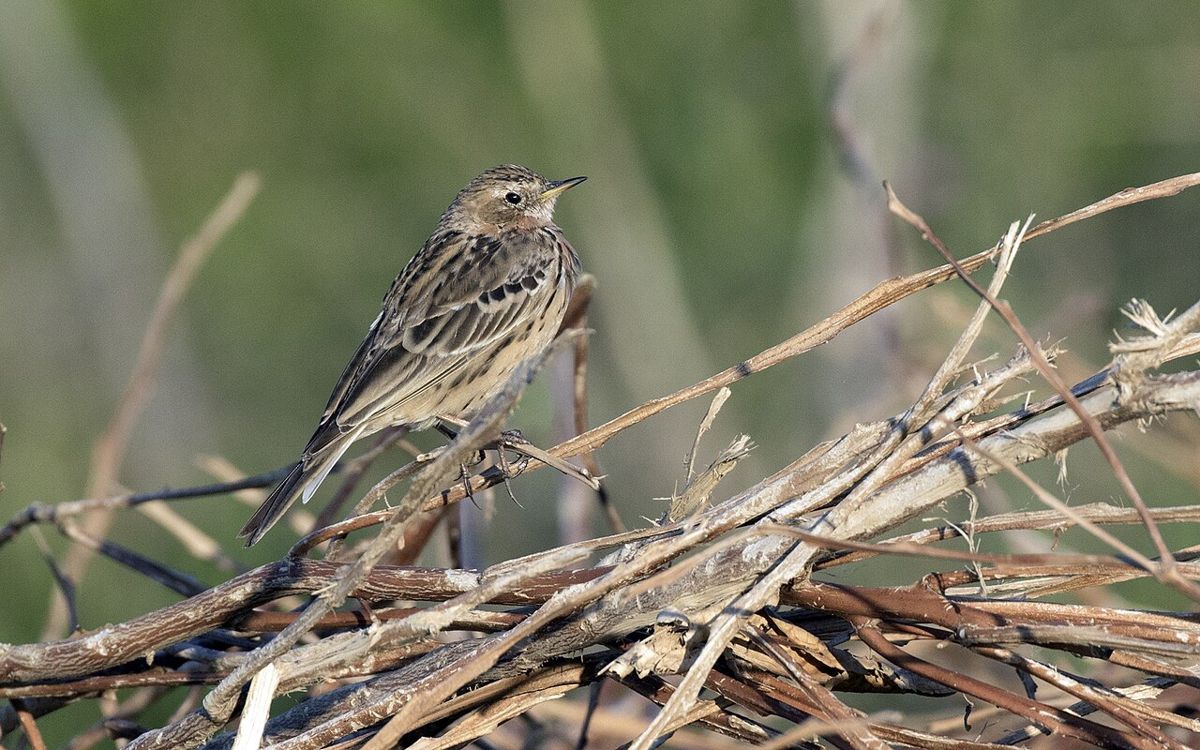
Photo: Zeynel Cebeci · CC BY-SA 4.0 (May be cropped or resized)
Anthus cervinus
Basic stats
Diet
Insects and seeds
Habitat
Open tundra, marshland, rough grassland, and mountains
Range
Breeds across northern Eurasia and Alaska; winters in Africa and Southeast Asia
Clutch size
4–6 eggs
Incubation period
Nearly 2 weeks
The Red-throated Pipit is a small, strongly streaked pipit. A breeding adult is distinctive, with a brick-red face and throat. Outside that plumage it is brown and heavily marked above, with pale mantle stripes and dark streaking over white underparts. Compared with Meadow and Tree Pipits, its autumn plumage looks more extensively striped across the cap, back, rump, chest, and flanks. Its flight is strong and direct, accompanied by a characteristic thin psii call. (Wikipedia, Red-throated Pipit account)
This long-distance migrant breeds across the boreal north of Europe and Asia, with a foothold in Alaska, and winters in Africa and Southeast Asia. It uses open country, including tundra, mountains, marshes, and rough grassland. The ground nest is tucked beside a grass tussock or on a marsh hummock, built from dry grasses and sedges and lined with softer material. Four to six eggs are incubated by the female for nearly two weeks. Adults eat insects and also take seeds. (Wikipedia, Red-throated Pipit account)
Quick answers
- What does the Red-throated Pipit eat?
- Insects and seeds
- What habitat does the Red-throated Pipit live in?
- Open tundra, marshland, rough grassland, and mountains
- Where is the Red-throated Pipit found?
- Breeds across northern Eurasia and Alaska; winters in Africa and Southeast Asia
- How many eggs does the Red-throated Pipit lay?
- 4–6 eggs
- How long are the eggs of the Red-throated Pipit incubated?
- Nearly 2 weeks