
 Wildlife
of Mongolia
Pallas's Cat
Felidae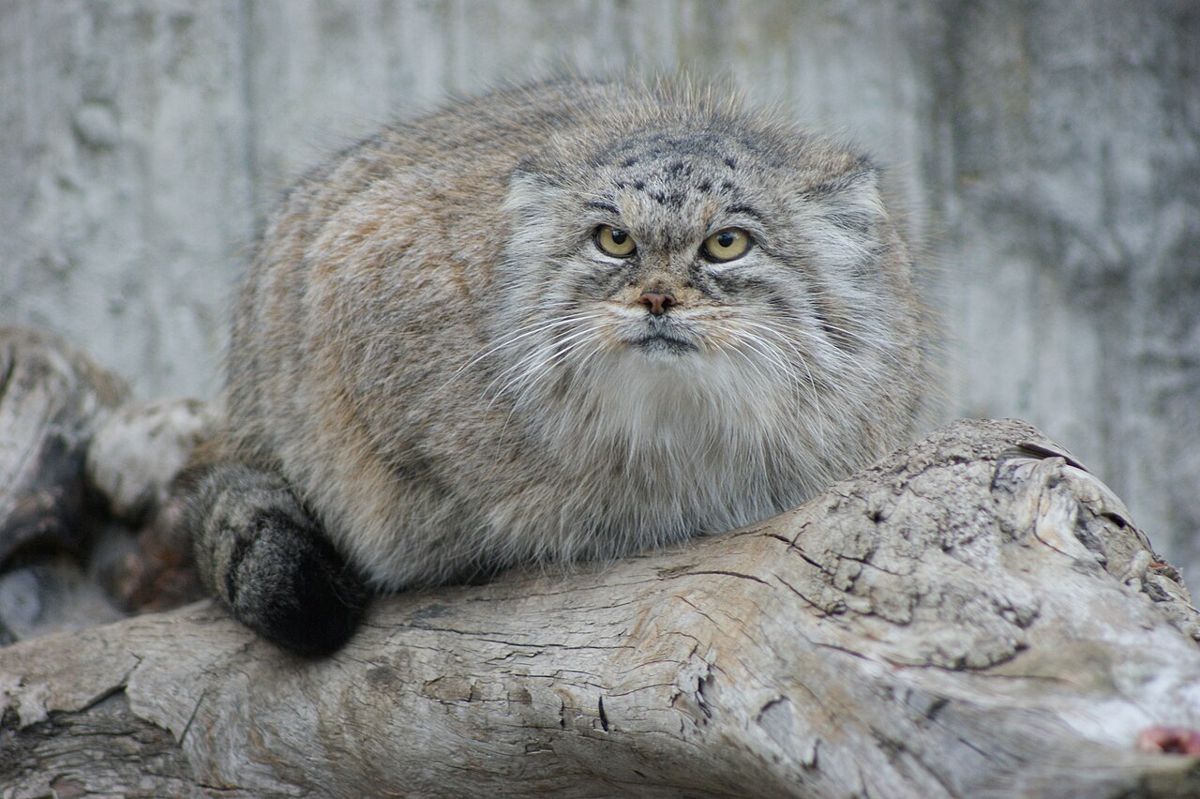
Photo: Albinfo · CC BY-SA 3.0 (May be cropped or resized)
Otocolobus manul
Basic stats
Diet
Primarily pikas and rodents; also birds and other small prey
Habitat
Rocky montane grassland, shrubland, steppe, and semidesert
Range
Patchily distributed across Central Asia, including Mongolia
Litter size
2–6
Pallas's cat, or manul, is a small, stocky wild cat whose long dense pale-grey coat makes it appear larger than it is. Rounded ears sit unusually low on the sides of the broad head, and the thick bushy tail carries dark rings. Dark cheek stripes and scattered body markings break up its outline among rock and dry vegetation. Short legs and heavy fur suit a cold continental climate. The Mongolian-derived name manul and the distinctive low-set ears help separate it from domestic cats and the longer-legged felids sharing its range. (Wikipedia, general species account)
In Mongolia and elsewhere in Central Asia, Pallas's cats occupy rocky grassland, shrubland, steppe, and semidesert, sheltering in crevices, caves, and marmot burrows. A central Mongolian radio-tracking study documented seasonal and maternal dens and found mainly crepuscular summer activity, while western Altai cats were also active by day. They hunt by stalking, ambushing burrow entrances, or reaching into shallow burrows. Pikas and rodents dominate the diet; Mongolian studies also record gerbils, voles, ground squirrels, birds, lizards, and invertebrates. Females bear two to six kittens in spring. (Wikipedia species account; Ross et al., central Mongolia studies)
Quick answers
- What does the Pallas's Cat eat?
- Primarily pikas and rodents; also birds and other small prey
- What habitat does the Pallas's Cat live in?
- Rocky montane grassland, shrubland, steppe, and semidesert
- Where is the Pallas's Cat found?
- Patchily distributed across Central Asia, including Mongolia
- What is the litter size of the Pallas's Cat?
- 2–6