 Wildlife
of Mongolia
Eurasian Water Vole
Cricetidae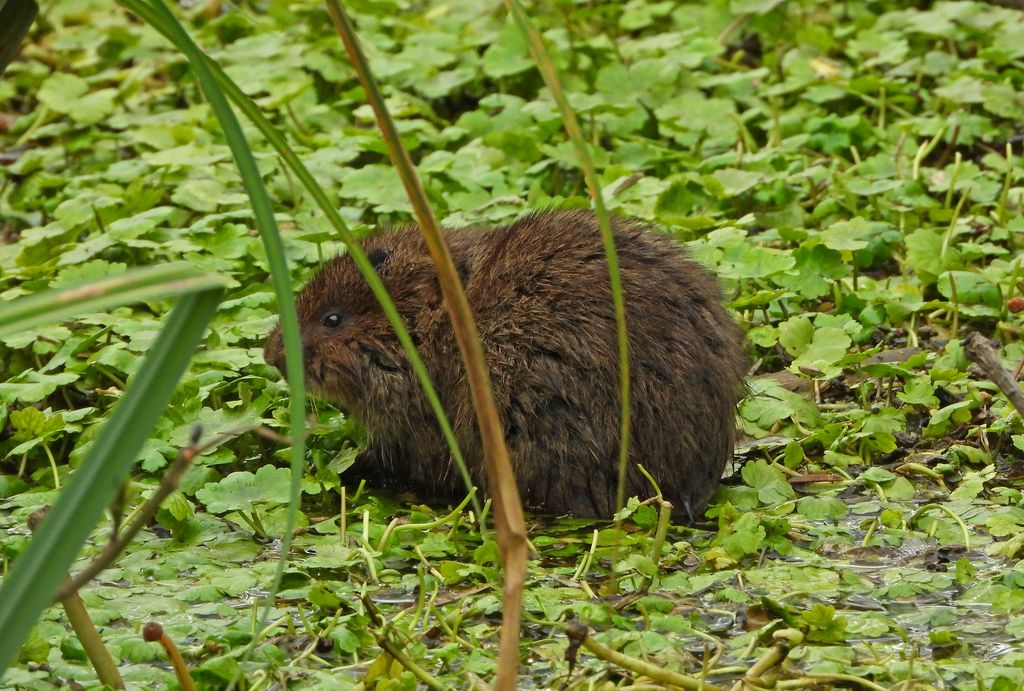
Photo: (c) Paul Lewis, some rights reserved (CC BY) · CC BY 4.0 (May be cropped or resized)
Arvicola amphibius
Basic stats
Diet
Mainly grasses, sedges, rushes, herbs, and other waterside plants
Habitat
Vegetated banks, reed beds, ponds, streams, rivers, ditches, and wet uplands
Size
14–22cm head-and-body length
The Eurasian water vole is a stout, semiaquatic rodent, not a true rat. It has a rounded nose, chubby face, short furry ears, deep brown coat, and hair covering the tail, paws, and ears. Adults measure about 14–22cm from head to rump, with a tail roughly half the body length. Its thick, uniformly dark pelage and blunt profile help separate it from the more pointed-faced brown rat. The species was long published under the synonym Arvicola terrestris. (Wikipedia, European water vole account)
Water voles dig bank burrows beside slow or calm water and can also weave above-ground nests in reed beds. Dense riparian plants provide both cover and food: grasses, sedges, rushes, herbs, roots, buds, seeds, and fruit dominate. They swim and dive well, generally live outside large groups, and mark individual territories with latrines and flank-gland scent. Breeding may run from March into late autumn, with pregnancy lasting about 21 days. Mongolia is confirmed by the Mammal Diversity Database, but no named Mongolian viewing site was supported by the opened sources. (Wikipedia, European water vole account; Mammal Diversity Database, Mongolia country list)
Quick answers
- What does the Eurasian Water Vole eat?
- Mainly grasses, sedges, rushes, herbs, and other waterside plants
- What habitat does the Eurasian Water Vole live in?
- Vegetated banks, reed beds, ponds, streams, rivers, ditches, and wet uplands
- How big is the Eurasian Water Vole?
- 14–22cm head-and-body length