 Wildlife
of Mongolia
Eurasian Skylark
Alaudidae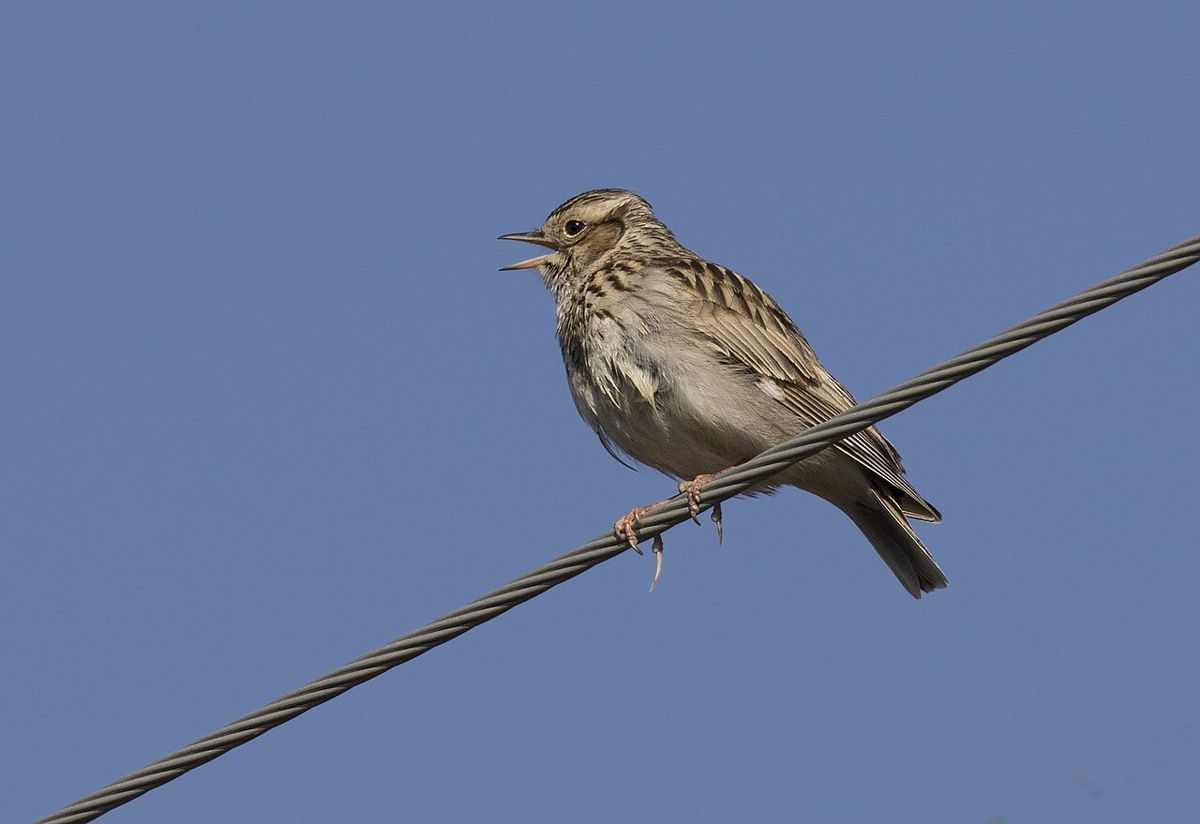
Photo: Zeynel Cebeci · CC BY-SA 4.0 (May be cropped or resized)
Alauda arvensis
Basic stats
Diet
Seeds and invertebrates
Habitat
Open farmland, grassland and heath
Clutch size
3–5 eggs
Incubation period
About 11 days
Size
16–18cm
Wingspan
30–36cm
Weight
26–50g
The Eurasian skylark is a streaked brown lark of open ground, with buff-white underparts, a streaked breast, a small crest and white edges to the outer tail. The sexes look alike. On the ground its cryptic plumage blends into soil and short vegetation, but displaying males become conspicuous as they rise high above a territory and deliver a prolonged, varied song while hovering. The broad trailing edge of the wing appears pale in flight. (Wikipedia, Eurasian skylark account)
Eurasian skylarks occupy farmland, grassland and heath across Europe and the Palearctic; named subspecies occur in both southwestern and northern-eastern Mongolia. They eat seeds and invertebrates, with insects especially important to growing young. The female makes an open cup in a shallow ground depression away from trees and hedges, lays three to five eggs and incubates for about eleven days. Both parents feed the chicks, which leave the exposed nest before they can fly. (Wikipedia, Eurasian skylark account)
Quick answers
- What does the Eurasian Skylark eat?
- Seeds and invertebrates
- What habitat does the Eurasian Skylark live in?
- Open farmland, grassland and heath
- How many eggs does the Eurasian Skylark lay?
- 3–5 eggs
- How long are the eggs of the Eurasian Skylark incubated?
- About 11 days
- How big is the Eurasian Skylark?
- 16–18cm
- What is the wingspan of the Eurasian Skylark?
- 30–36cm
- How much does the Eurasian Skylark weigh?
- 26–50g